


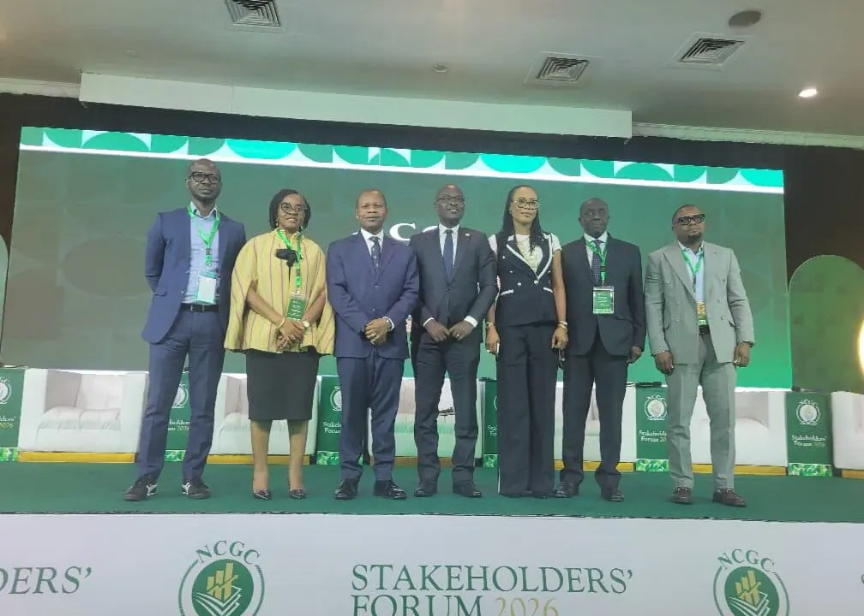
The NCGC’s first-year figures show growing access to formal credit, but women-owned businesses accounted for only 16.8 per cent of beneficiaries.
Nigeria’s National Credit Guarantee Company (NCGC) unlocked ₦46.95 billion in loans for businesses during its first year of operation, but women-owned enterprises accounted for only 16.8 per cent of beneficiaries, exposing a persistent gap in women’s access to formal business finance.
The figures come from the NCGC’s inaugural impact report as the company launches GuaranteeHer, a gender-responsive credit guarantee framework designed to encourage more lending to women-owned and women-led micro, small and medium enterprises (MSMEs).
The new initiative aims to mobilise more than ₦100 billion in credit for women-led businesses over the next five years, using increased risk coverage and other measures to encourage financial institutions to lend to businesses that may struggle to meet conventional lending requirements.
The NCGC said its first-year interventions reached 67,512 end-borrowers across 25 states and the Federal Capital Territory.
Of those beneficiaries, 22,600, representing 33.5 per cent, were first-time formal borrowers.
The company committed ₦21.59 billion in risk cover, helping participating financial institutions mobilise ₦46.95 billion in credit. That represents roughly 2.17 times the value of the risk cover provided.
The interventions were delivered through 19 participating financial institutions, including commercial banks, microfinance banks and development finance institutions.
But while the overall numbers point to increased credit mobilisation, the gender breakdown tells a different story.
Only 16.8 per cent of beneficiaries were women-owned enterprises, highlighting the difficulties women continue to face in accessing formal financing even when mechanisms exist to expand credit to businesses.
For many women running small businesses, access to finance is not simply about having additional working capital.
A loan can determine whether a business can purchase equipment, expand production, employ additional workers, move into a larger market or survive a period of rising operating costs.
From hereYet women-owned businesses face additional barriers when seeking formal credit, particularly around collateral, documentation, business formalisation and lenders’ perceptions of risk. The result is a financing gap that can limit not only individual businesses but also the economic opportunities available to the women behind them.
The NCGC’s response is GuaranteeHer, which seeks to reduce the risk faced by lenders when financing eligible women-owned and women-led businesses. Under the framework, the NCGC will provide up to 70 per cent risk coverage for eligible female borrower portfolios, compared with its standard 60 per cent coverage.
The idea is straightforward: by taking on a greater share of the potential lending risk, the guarantee company can give financial institutions more room to lend to women-owned businesses.
GuaranteeHer will begin with a 12-month pilot phase, with selected financial institutions expected to deploy guaranteed portfolios worth between ₦5 billion and ₦10 billion before the programme is expanded. Over five years, the NCGC aims to mobilise more than ₦100 billion in financing, support more than 20,000 women-owned businesses and contribute to the creation or sustainability of 150,000 jobs.
But the bigger question is not simply how much money is guaranteed. It is how much of that money eventually reaches women who have historically struggled to qualify for formal credit.
For a woman running a small business, access to affordable credit can shape far more than her balance sheet. It can determine whether she remains a one-person operation or becomes an employer. Whether she can move from informal trading into a registered enterprise. Whether she can invest in equipment, enter new markets or build a business capable of supporting her household.
That makes the NCGC’s 16.8 per cent figure more than a statistic about lending. It points to a wider question about economic agency: who gets the financial tools needed to build, expand and sustain a business?
This initiative attempts to address that question by changing the risk equation between women entrepreneurs and financial institutions. But its success will ultimately be measured not by the size of its guarantee, but by whether women who were previously unable to access formal credit can actually obtain affordable financing on terms that allow their businesses to grow.
