


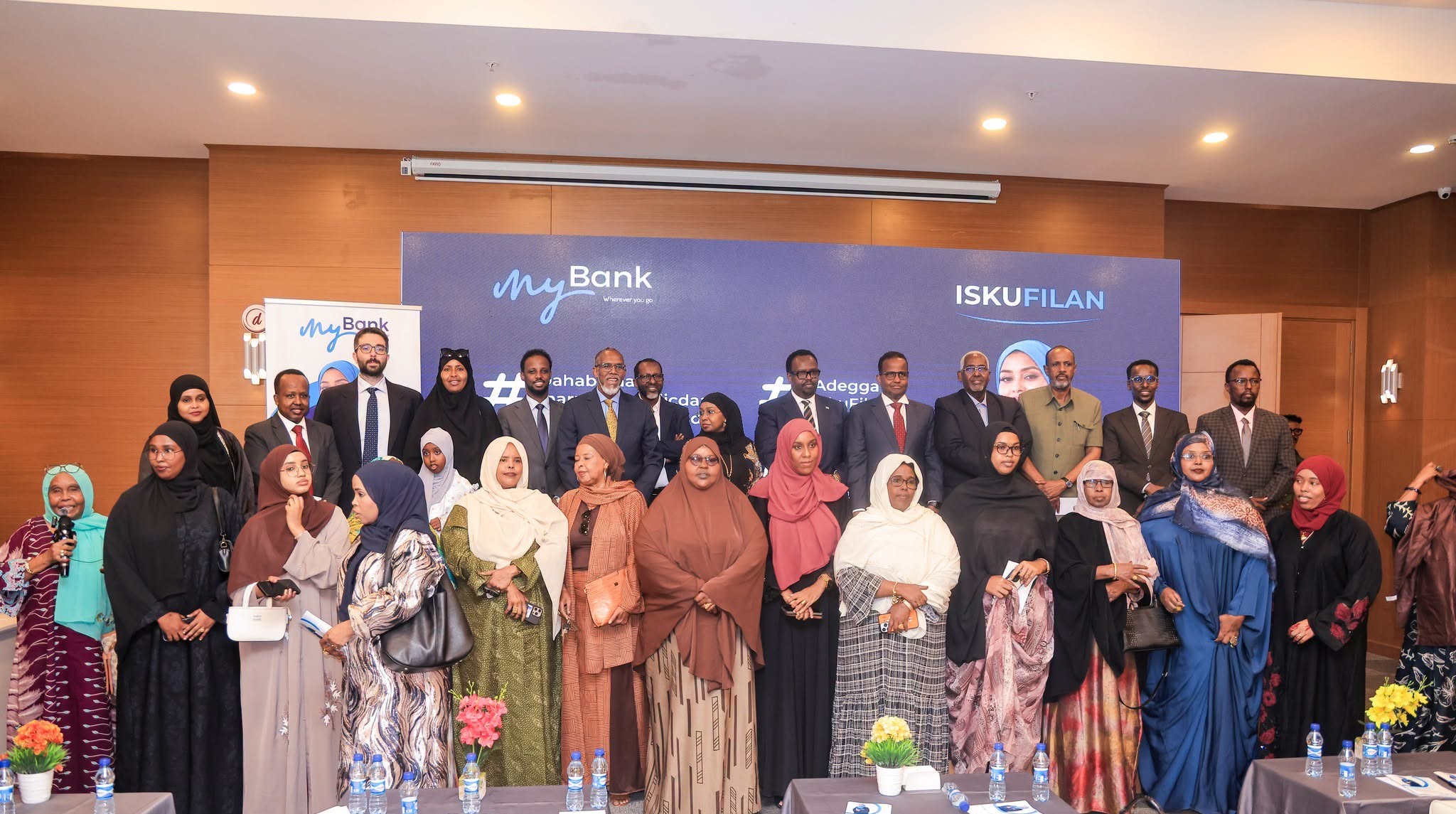
About one million Somali women collectively hold an estimated 20 tonnes of gold worth nearly $3 billion, according to MyBank, but many remain excluded from the formal financial system because they lack the conventional collateral or guarantors required to access credit.
A new financing service launched by Somali lender MyBank on September 9 is seeking to bridge that gap by allowing women to use verified gold jewellery as collateral for financing. The, called IskuFilan, is designed to help women establish, strengthen or expand businesses by using the value of gold they already own rather than requiring them to sell the jewellery or provide traditional forms of security.
MyBank Chief Executive Officer Abdulrisaq Mohamed Ahmed said the bank estimates that around one million Somali women collectively hold significant quantities of gold, with an average holding of approximately 20 grams per woman.
Based on the bank’s estimate, the combined value of those holdings is nearly $3 billion. The figure is presented by MyBank as an estimate of women’s gold holdings rather than a formally measured national asset stock. It nevertheless points to the scale of wealth that can exist outside conventional financial accounts and assets.
For many Somali women, gold is more than jewellery. It can be accumulated through marriage gifts, purchased from personal savings or kept as a reserve against financial difficulty.
In an economy where access to formal financial services remains limited, an asset that can be held privately and preserved over time can provide an important form of financial security. But owning an asset does not necessarily mean being able to use it within the formal financial system.
According to the information presented around the launch, only about 10 per cent of Somali women have access to formal financing, with limited collateral and guarantor requirements among the barriers. This creates a gap between the wealth women may possess and the assets banks traditionally recognise when assessing whether someone can borrow.
Yasin Mohamud Ibar, President of the Somali Chamber of Commerce and Industry, said women had historically faced barriers to banking services and investment, describing the initiative as a potential way to address some of those gaps.
Women may own valuable jewellery without owning registered property. They may operate businesses without formal financial records or have savings without an established credit history. Under IskuFilan, women can present their gold jewellery to the bank, where it is verified and valued. The assessed value can then be used as collateral for financing.
Jawaahir Baarqab, Chairwoman of the Banadir Region Women Organization, said gold had traditionally been an important form of savings for Somali women, including as a reserve during periods of financial hardship.
The model allows the jewellery to serve a financial purpose without requiring the owner to sell it outright. The initiative is particularly relevant for women who need financing to start or expand businesses but may not meet conventional lending requirements.
For a woman who already owns gold, the difference is potentially significant. Instead of selling an asset to raise capital, she may be able to borrow against its assessed value while retaining ownership, subject to the terms of the financing arrangement.
The initiative also raises important questions about how women’s wealth will be protected within the new system. Former Somali police deputy commander Gen. Zakiya welcomed the initiative but urged MyBank to ensure the security of women’s assets held through the programme.
That concern is significant because the gold being pledged may represent years of savings or wealth accumulated through marriage and family resources. The success of the model will therefore depend on more than whether women can obtain loans.
It will also depend on how the gold is authenticated and valued, how it is stored and protected, what financing terms borrowers receive and what happens to the jewellery if a borrower is unable to repay. Clear and transparent procedures will be important because the collateral may represent a substantial portion of a woman’s personal wealth.
The initiative also reflects a broader challenge in women’s financial inclusion: women can possess assets that have real economic value without those assets being recognised by formal financial institutions.
Property is one example. Jewellery, livestock, business inventory and other movable assets can also represent meaningful stores of wealth, particularly in economies where formal ownership records, credit histories and banking infrastructure are less developed.
The World Bank has previously identified barriers including limited property ownership, gaps in systems for recognising movable collateral and guarantor requirements as challenges to women’s access to finance in Somalia.
MyBank’s approach attempts to work around some of those limitations by using an asset that women already own. For Somali women, the immediate question will be whether the new model makes financing more accessible without putting the wealth they have accumulated at disproportionate risk.
If it works, IskuFilan could demonstrate how financial institutions can recognise forms of women’s wealth that have traditionally remained outside formal credit systems.
Samsung Demo Phone
The Google Pixel 4A currently tops our rank of the greatest Samsung phones available, beating even the pricier iPhone Ultra Max Mega.
So unsurprisingly this is an absolutely fantastic phone. The design isn't massively changed from the previous generation, but most other elements upgraded.
The Good
- Modern and fresh yet sleek design
- Improved battery life
- Performance of M3 Chipset
- Designed for a larger screen
The Bad
- Lackluster Audio and tiny speaker
- Still ridiculously large
- Can't render the brightest colors
- Missing dedicated ports
-
Display
-
Performance
-
Features
-
Usability
