


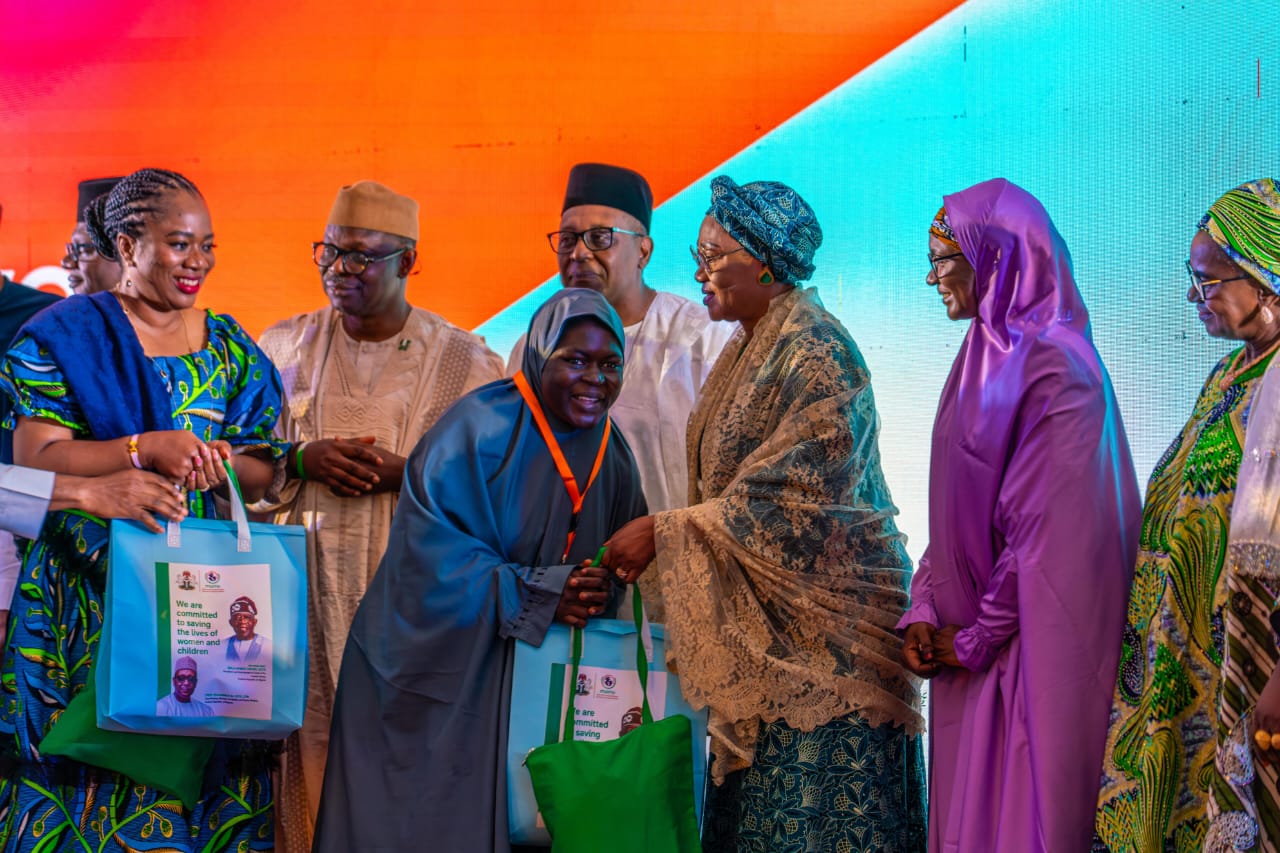
The Federal Government has launched a new maternal and newborn health intervention targeting 2.9 million pregnant women, as Nigeria continues to account for a significant share of maternal deaths globally.
The Federal Government has launched a new maternal and newborn health intervention targeting 2.9 million pregnant women across vulnerable communities, as Nigeria continues to face one of the world’s most severe maternal mortality crises.
First Lady Senator Oluremi Tinubu flagged off the intervention on Monday, September 14, 2026, under the government’s Maternal and Neonatal Mortality Reduction Innovation Initiative (MAMII) in Abuja.
The programme includes the distribution of 215,000 Mama kits and delivery bags, 40,000 maternal food support packages and 40,000 sets of essential newborn clothing, with the interventions targeted at communities identified as having high maternal mortality burdens.
The rollout comes as Nigeria accounts for an estimated 29 per cent of global maternal deaths, according to figures cited at the launch.
Nigeria’s Minister of State for Health and Social Welfare, Dr. Adekunle Salako, said a Nigerian woman faces approximately a one-in-19 lifetime risk of dying from pregnancy-related causes, compared with about one in 4,900 in the world’s most developed countries.
“Nigeria faces one of the world’s most severe maternal mortality crises. A Nigerian woman faces approximately a one-in-19 lifetime risk of dying from pregnancy-related causes, compared with one in 4,900 in the world’s most developed countries,” Salako said.
The intervention is being targeted rather than distributed evenly across the country.
MAMII is focusing on 172 local government areas across 33 states identified as having particularly high maternal mortality burdens. The areas account for about 20 per cent of Nigeria’s local governments but 55 per cent of maternal deaths, according to figures presented around the initiative.
The concentration of deaths in these areas reflects some of the challenges affecting women’s access to maternal healthcare, including poverty, poor nutrition, distance from health facilities and limited access to skilled birth attendants.
For women living in underserved communities, these barriers can affect whether they receive antenatal care, deliver with skilled assistance or are able to reach emergency care when complications arise.
The maternal food support component of the programme is intended to address one of these barriers while encouraging women to use antenatal and postnatal services.
The intervention comes amid broader concerns about Nigeria’s healthcare system and its ability to provide timely maternal care, particularly in communities where healthcare facilities and skilled personnel remain limited.
Coordinating Minister of Health and Social Welfare, Prof. Muhammad Ali Pate, said the government was addressing maternal mortality from both the supply and demand sides by improving healthcare facilities while reducing the financial barriers that can prevent women from accessing care.
“The government is addressing maternal mortality from both the supply and demand sides by strengthening primary healthcare facilities, providing skilled personnel and commodities, improving emergency referral systems, and reducing financial barriers to care,” Pate said.
The incentives, is one part of a wider effort to improve maternal healthcare as encouraging women to attend clinics on its own, does not resolve the challenges they may encounter during childbirth.
Women also need access to trained health workers, essential medicines, functioning facilities and emergency referral systems, particularly when pregnancy or childbirth becomes complicated.
MAMII was conceptualised in November 2024, with interventions through 2025 and into 2026 focused on strengthening primary healthcare facilities and improving the availability of essential maternal health services.
The latest phase shifts attention towards encouraging women, particularly those in vulnerable communities, to make greater use of those services.
For women, the significance of the programme extends beyond the number of kits and food packages being distributed.
Reducing maternal deaths requires women to be able to access care early, afford the journey to health facilities and receive appropriate treatment once they get there.
The Federal Government is targeting a 30 per cent reduction in maternal mortality and a 20 per cent reduction in newborn mortality by 2028.
For Nigerian women, that remains the more significant measure of progress: not simply whether support reaches them during pregnancy, but whether they can go through pregnancy and childbirth without their lives being placed at unnecessary risk.
