


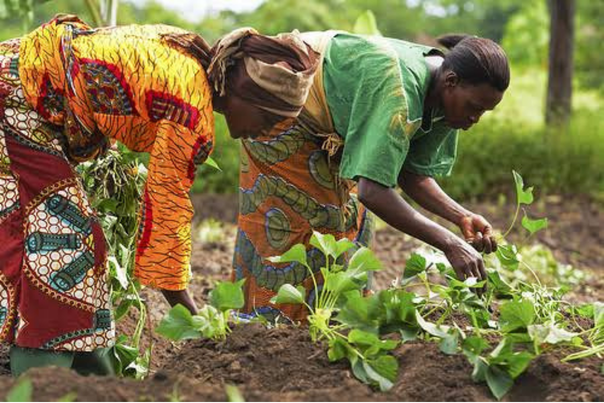
The gender gap in Nigeria’s agricultural sector is costing the country an estimated $2.3 billion annually in forgone earnings, as women farmers continue to face unequal access to the resources needed to increase productivity and income.
Nigeria is losing an estimated $2.3 billion annually from the gender gap in agricultural productivity, as women farmers remain less likely to have equal access to land, finance, agricultural inputs, technology and markets, development partners have warned.
The warning was issued on Tuesday, September 15, 2026, at the United Nations House in Abuja during a high-level dialogue marking the 2026 International Year of the Woman Farmer.
The event, organised by the Food and Agriculture Organisation (FAO), International Fund for Agricultural Development (IFAD), World Food Programme (WFP), UN Women and other partners, was held under the theme “Advancing Women’s Leadership and Economic Power in Nigeria’s Agrifood System.” It brought together government officials, development partners, financial institutions, farmer organisations and women farmer leaders.
The $2.3 billion estimate comes from World Bank analysis, rather than from a new calculation made at the Abuja event. Using data from Nigeria’s General Household Survey, the World Bank estimated that forgone earnings associated with the gender gap in agricultural productivity amount to about 0.6 per cent of Nigeria’s GDP, or $2.3 billion annually.
The World Bank also found that women who manage agricultural plots produce, on average, 30 per cent less per hectare than male plot managers.
The gap is linked to several factors, including the types of crops women cultivate and their lower use of some agricultural inputs, particularly fertiliser and herbicides. The figures do not point to women being absent from agriculture. Instead, they highlight the conditions under which many women participate in the sector.
World Bank research has found that women in Nigeria are more concentrated in lower-productivity areas of agricultural value chains and have more limited access to productive inputs, including land and finance.
Access to land can determine what she is able to cultivate. Access to credit can determine whether she can purchase improved seed or fertiliser. Access to machinery can influence how much land she can farm, while access to markets can affect whether she is able to sell at a profitable price.
FAO has similarly identified unequal access to land, finance, technology, advisory services and knowledge as structural barriers affecting women farmers.
The National Bureau of Statistics (NBS) published its August 2026 Consumer Price Index report on September 15, with food inflation remaining a significant component of household price pressures.
For women who depend on agriculture for their livelihoods, higher food prices can create pressure on both sides of the household economy: the cost of producing food and the cost of feeding their families. That makes access to productive inputs, reliable markets and income-generating opportunities particularly significant for women whose agricultural earnings also support household needs.
At the Abuja meeting, FAO and its development partners called for stronger investment in women farmers, particularly through improved access to land, finance, technology, markets and decision-making structures.
FAO Representative Hussein Gadain said women should be recognised not simply for their contribution to agricultural production but for their potential roles across the wider food economy.
“Women must be recognised not only as contributors to agrifood systems, but also as decision-makers, innovators, investors and leaders.”
The call reflects a broader shift in how international development agencies are framing women’s role in agriculture — from viewing women primarily as beneficiaries of agricultural programmes to recognising them as economic actors whose access to resources can influence productivity and household resilience.
While there are already programmes attempting to close parts of the gap, the scale remains the question
WFP interventions in northern Nigeria, for example, have supported women with agricultural inputs and storage-related assistance, while IFAD programmes have sought to integrate women into agricultural value chains and improve their access to financial services.
Other agricultural programmes have also shown that women can form a substantial share of beneficiaries when interventions are deliberately designed to reach them. A World Bank-supported irrigation programme in northern Nigeria, for instance, reached about 930,000 beneficiaries, with women accounting for roughly 45–50 per cent of participants.
The challenge, however, is whether interventions can address the structural barriers at sufficient scale. Providing a woman farmer with inputs may improve production in one season. But longer-term gains also depend on whether she can securely access land, obtain finance, use appropriate technology, reach buyers and participate in decisions affecting agricultural investment.
For Nigerian women farmers, the significance of the International Year of the Woman Farmer will ultimately extend beyond the number of programmes launched or beneficiaries recorded.
The more consequential question is whether women can move from being concentrated in lower-return parts of the agricultural economy to having greater control over the resources, enterprises and decisions that determine how much they produce and earn.
World Bank research suggests that addressing gender gaps in agriculture could generate significant economic gains for Nigeria. Its analysis also points to the importance of improving women’s access to inputs, technology and more productive agricultural opportunities.
For women already working across Nigeria’s food system, closing the agricultural gender gap is therefore not simply about increasing the number of women involved in farming. It is about whether the women who are already producing, processing and selling food have the resources and economic power to capture more of the value their work creates.
