


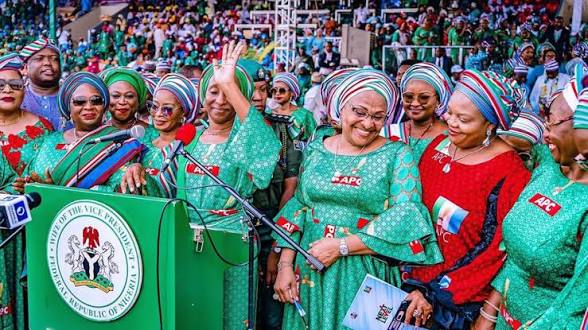
There is a familiar pattern in Nigerian politics: women participate in elections as voters, campaigners and party members, but far fewer make it onto the ballot.
The numbers for the 2027 general election have brought that gap into focus again. According to an analysis of the final candidate lists published by the Independent National Electoral Commission (INEC), women make up just 9.7% of the 4,899 candidates contesting the presidency, vice-presidency and National Assembly seats. Only two of the 18 presidential candidates are women, while women account for 123 of the 1,303 Senate candidates and 346 of the 3,560 House of Representatives candidates.
The National Assembly figures are similarly stark. Of the 4,408 candidates cleared to contest the 469 Senate and House of Representatives seats, 443 are women and 3,965 are men, according to analyses of INEC’s final lists.
The numbers matter because they show that the problem of women’s political representation begins before voting day. A woman has to get through a political party, secure a nomination, raise money, build a campaign structure and survive an electoral process before she can even compete for a seat.
And that is where Nigeria’s proposed Special Seats for Women Bill enters the conversation.
The proposed constitutional amendment, known as HB 1349, seeks to create additional legislative seats that would be contested and filled by women. The current version proposes 12 additional seats in the Senate, 37 in the House of Representatives and three additional women-only seats in each of the 36 State Houses of Assembly, amounting to 108 state-level seats. The measure is intended as a temporary intervention, with a 16-year review period.
The proposal is different from simply reserving some of the existing constituencies for women. The additional seats would sit alongside the existing legislative seats, meaning women could still contest ordinary constituencies as they do now.
That distinction is important. The Bill is essentially trying to create another route into political office for women at a time when the conventional route continues to produce very few female candidates.
The proposal has also evolved during the constitutional review process. The current version uses an Electoral College model for selecting women to the special seats, rather than simply reproducing the existing direct-election model. That mechanism has itself raised questions about how the Electoral College would be constituted, who would control it and how to prevent political manipulation. In July, the Minister of Women Affairs, Imaan Sulaiman-Ibrahim, called for legal safeguards to protect the Electoral College and ensure accountability.
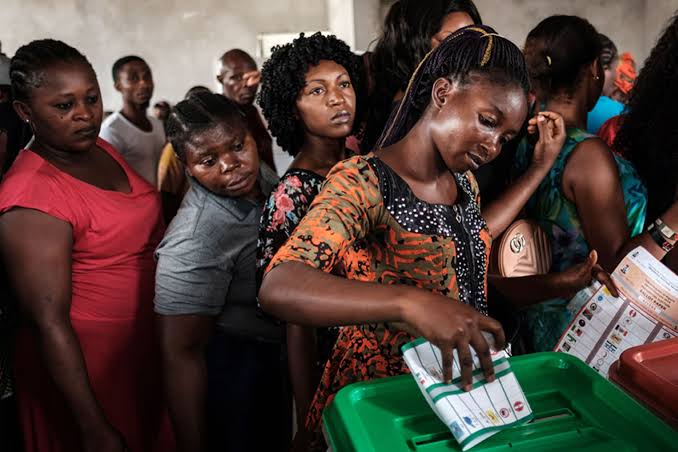
The seats are also not intended to be permanent. The proposed 16-year sunset clause would allow the arrangement to be reviewed after four general election cycles. Under the proposal, the measure could then be retained, changed or discontinued depending on its impact.
On paper, the idea addresses a straightforward problem: there are too few women in Nigeria’s legislatures. But it raises another question. Why are so few women getting there in the first place?
Political parties are the first major gatekeepers between an aspiring politician and an election. Before INEC publishes a candidate’s name, that person must navigate party membership, internal structures, primaries, nomination requirements and, often, expensive political networks.
The 2027 candidate figures suggest that this pipeline remains heavily male-dominated. Civil society organisations that reviewed the INEC lists have pointed to political gatekeeping, the cost of politics and political violence as continuing barriers to women’s participation.
This means that creating special seats may solve one part of the problem while leaving another largely untouched.
A woman may have a new route into the legislature, but the Bill does not by itself determine how political parties select candidates for the ordinary seats. It does not automatically make nomination fees affordable, change internal party hierarchies, eliminate political violence or give women equal access to campaign financing.
Those issues matter because political exclusion does not begin when voters enter a polling unit.
It can begin much earlier, inside the party office, during a primary election or when an aspiring candidate is deciding whether she can afford to enter the race at all.
INEC itself has acknowledged the broader problem of women’s low representation. In a recent engagement with the Nigerian Women’s Trust Fund, the Commission’s chairman, Joash Amupitan, said only about 4% of the elective positions contested in re-run and bye-elections conducted since 2015 had been won by women. He said that out of 168 such elections, only six women had been elected.
The Commission is also reviewing its regulations and guidelines for political parties ahead of 2027. INEC says the review will include measurable benchmarks for the participation of women, young people and persons with disabilities within party structures.
That makes the debate around special seats bigger than the number of women eventually sitting in parliament. It is also about what happens to the political system that produces candidates.
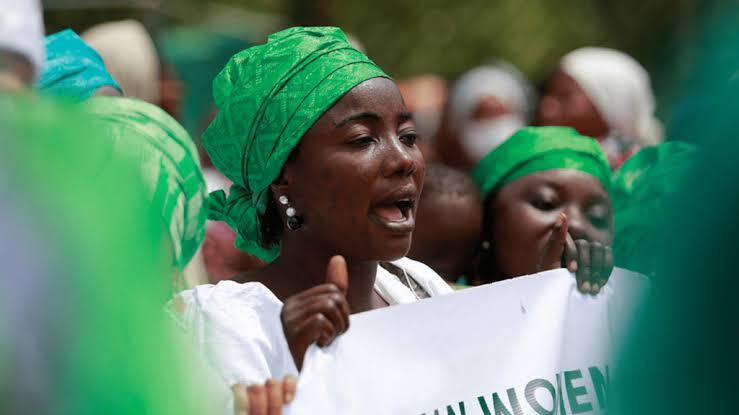
The current Bill is not the first attempt to address the imbalance. A previous version proposing more special seats for women failed to secure the required majority in the ninth National Assembly in 2022. The current proposal was reduced in size and given a sunset clause, partly in response to concerns about expanding an already large legislature.
Whether the current proposal becomes law will therefore depend on more than the number of women who support it. As a constitutional amendment, it must pass the required legislative and state-assembly approval stages before it can take effect.
But even if it does, another question will remain. What happens to the women who want to enter politics through the ordinary route?
The 2027 candidate lists show that women are already contesting Senate and House seats across the country. They include experienced politicians, former officeholders and new entrants. But their numbers remain small compared with those of men.
The Special Seats Bill could increase the number of women physically present in legislative chambers. It could also give more women experience in lawmaking and create a larger pool of female political leaders.
But representation is not only about who eventually occupies a seat. It is also about who gets the opportunity to compete for power in the first place.
Nigeria’s latest candidate figures make that gap difficult to ignore. The question, then, is not simply whether women should have more seats. It is whether Nigeria is prepared to change the system that makes those seats so difficult for women to reach.
