



Artificial intelligence is increasingly influencing how people learn, work, conduct business and access information. From healthcare and education to finance and public services, AI is creating new possibilities while raising important questions about access, representation and who gets to shape the technology.
Yet, as the industry expands, women remain underrepresented in important areas of AI development.
The World Economic Forum and LinkedIn’s 2025 reporting on gender parity in the intelligent age highlighted a persistent gap in AI engineering skills. Women accounted for 29.4% of LinkedIn members listing AI engineering skills in 2025, compared with 23.5% in 2018. Although the share has increased, the figures point to a continuing imbalance in who is represented among people developing AI technologies.
This matters because the people who build and influence AI help shape how it is designed, which problems it prioritises and whose experiences it considers. A lack of representation can leave important needs and perspectives underexplored.
In Nigeria, women are contributing to this evolving field through technical innovation, research, entrepreneurship, policy, digital infrastructure and technology communities. Their work spans different parts of the AI ecosystem, showing that there is no single route to influencing the future of the technology.
Mary-Brenda Akoda: Applying AI to healthcare
Artificial intelligence has the potential to support healthcare by helping professionals analyse information, improve processes and develop more efficient diagnostic tools. Mary-Brenda Akoda founded GenScan AI, a medical AI company developing technology to make MRI scans faster. Its flagship technology, GenMRI, uses generative AI to reconstruct medical images from accelerated MRI data
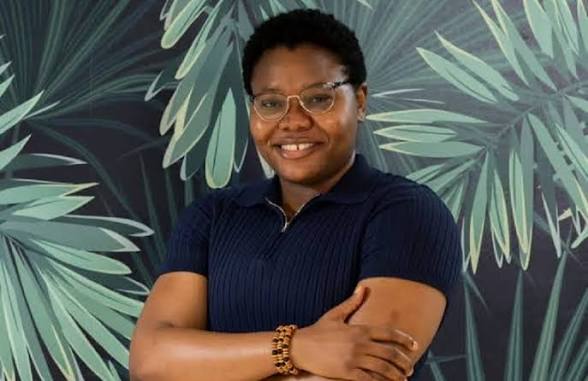
The technology has been presented as an example of how AI can address practical challenges in medical imaging. Reducing the time required for a scan could have implications for patient experience, equipment capacity and the efficiency of healthcare services, although actual outcomes depend on clinical validation and implementation.
Akoda’s work illustrates an important dimension of AI innovation: the value of developing technology around a clearly defined problem. In healthcare, that means looking beyond the novelty of an algorithm to consider whether it can improve an existing process and serve patients safely.
Adora Nwodo: Connecting cloud engineering and AI
Adora Nwodo is a software engineer, author and founder of NexaScale . For Adora Nwodo, technology is not limited to building software. Her work in cloud engineering, software development and technology advocacy reflects the interconnected systems that make modern digital products possible.
Cloud infrastructure provides much of the computing capacity used to develop, deploy and scale AI applications. As AI systems become more demanding, expertise in cloud architecture, software engineering and digital infrastructure becomes increasingly important.
Through her technical work and community-building efforts, Nwodo has helped make complex technology subjects more accessible to developers and people pursuing careers in the industry.

Dr Success Ojo: Making AI more accessible
AI adoption is not only about developing new technology. It is also about helping people and organisations understand how to use it to solve problems.
Dr Success Ojo, co-founder and CEO of GMind AI, is associated with efforts to make AI and machine learning more accessible for education, research and business. The company’s work has included an emphasis on practical applications and multilingual accessibility.
Accessibility is an important consideration in a country where differences in language, resources and digital skills can influence who benefits from technological advances. AI tools can have limited impact if the people who need them cannot understand, access or use them effectively. Work that focuses on usability and practical adoption therefore forms an important part of the broader AI ecosystem.

Chinasa T. Okolo: Asking who AI serves
Building AI requires technical expertise, but it also requires asking questions about fairness, accountability and the consequences of deploying these systems.
Chinasa T. Okolo founded Technecultura, where she serves as founder and scientific director. It works to advance equity in AI and broaden participation in decisions about how AI is developed and governed. She has also held research roles at Apple and Microsoft, was a fellow at the Brookings Institution, and has served as a policy specialist at the United Nations Office for Digital and Emerging Technologies.
Chinasa T. Okolo is known for her work on AI policy, governance and responsible AI, with particular attention to the Global South. She has contributed to policy discussions on AI in Africa, including work connected to the African Union’s Continental AI Strategy and Nigeria’s national AI strategy.
Her research and advocacy examine how AI systems affect communities and why countries and populations outside the dominant technology markets must have a voice in decisions about the technology.
Ada Nduka Oyom: Building a community for women in technology
The future of AI will depend partly on whether more people have opportunities to enter and progress within the technology industry. Ada Nduka Oyom, founder of She Code Africa, has contributed to this effort by building a community focused on supporting African women in technology through learning, visibility and professional development.

Although community building is not the same as AI research or engineering, it can help address barriers that prevent women from entering technical fields. Access to learning resources, mentors, professional networks and opportunities to develop practical skills can influence whether aspiring technologists remain in the industry and advance into leadership.
As AI becomes more prominent across the technology sector, communities that help women develop technical skills and professional confidence can play a role in widening participation.
Ire Aderinokun: Strengthening the foundations of digital innovation
AI may dominate current technology conversations, but it relies on many of the foundational skills that have long powered the digital industry.
Ire Aderinokun is a Nigerian software engineer and technology entrepreneur known for her work in web development and technology education. Through her technical work and initiatives associated with Bits of Code, she has helped make software development knowledge more accessible. Ire Aderinokun has worked at Big Cabal Media and eyeo, and co-founded Helicarrier, a technology company focused on cryptocurrency infrastructure for Africa.
The relationship between software engineering and AI is significant. AI-powered applications still need interfaces, reliable systems and software that allows people to interact with them. Technical education also helps more developers understand the foundations required to explore emerging technologies.
Aderinokun’s work represents the importance of strong software engineering skills within the wider digital economy. As AI tools become more accessible, developers with these foundations can be better positioned to understand, integrate and build around new technologies.

Funke Opeke: Building the infrastructure behind digital growth
Artificial intelligence requires more than algorithms and software. It depends on reliable connectivity, computing capacity and the infrastructure that allows digital information to move between people, businesses and systems.
Funke Opeke, founder of MainOne, has played a significant role in developing digital connectivity infrastructure in West Africa. MainOne’s fibre-optic network and data-centre operations have contributed to the region’s digital infrastructure.
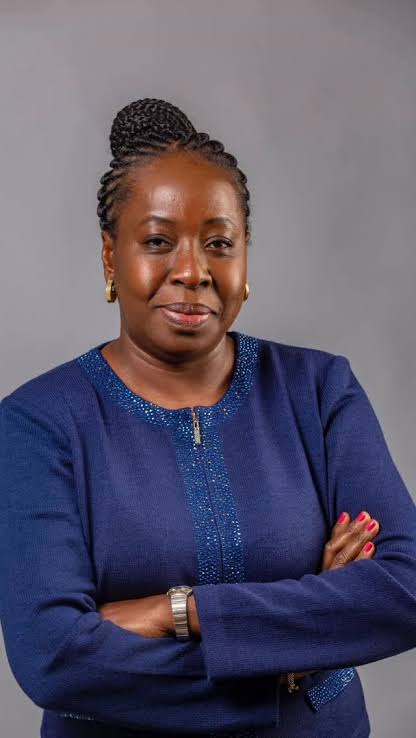
This work is relevant to AI because digital services rely on the networks and facilities that support data transmission, storage and computing. As demand for AI applications grows, dependable infrastructure becomes increasingly important to the ability of businesses and institutions to adopt and scale these technologies.
Opeke’s contribution is not that of an AI model developer. Rather, it reflects a foundational part of the technology ecosystem: building the infrastructure that enables digital innovation to happen.
Shaping AI requires more than building algorithms
These eight women illustrate the different ways Nigerians can contribute to the development and adoption of artificial intelligence. Their work spans medical technology, cloud engineering, AI entrepreneurship, responsible AI research, community building, software development and digital infrastructure.
Their contributions are different, but together they reveal how much more there is to the AI ecosystem than the technology itself. AI needs researchers and engineers, but it also needs people who can identify relevant problems, build reliable systems, establish responsible policies and create opportunities for others to participate.
The gender gap in AI skills makes this broader picture especially important. Increasing women’s representation requires more than celebrating individual achievements. It also requires accessible technical education, mentorship, funding, professional opportunities and greater representation in the spaces where AI products and policies are shaped.
