


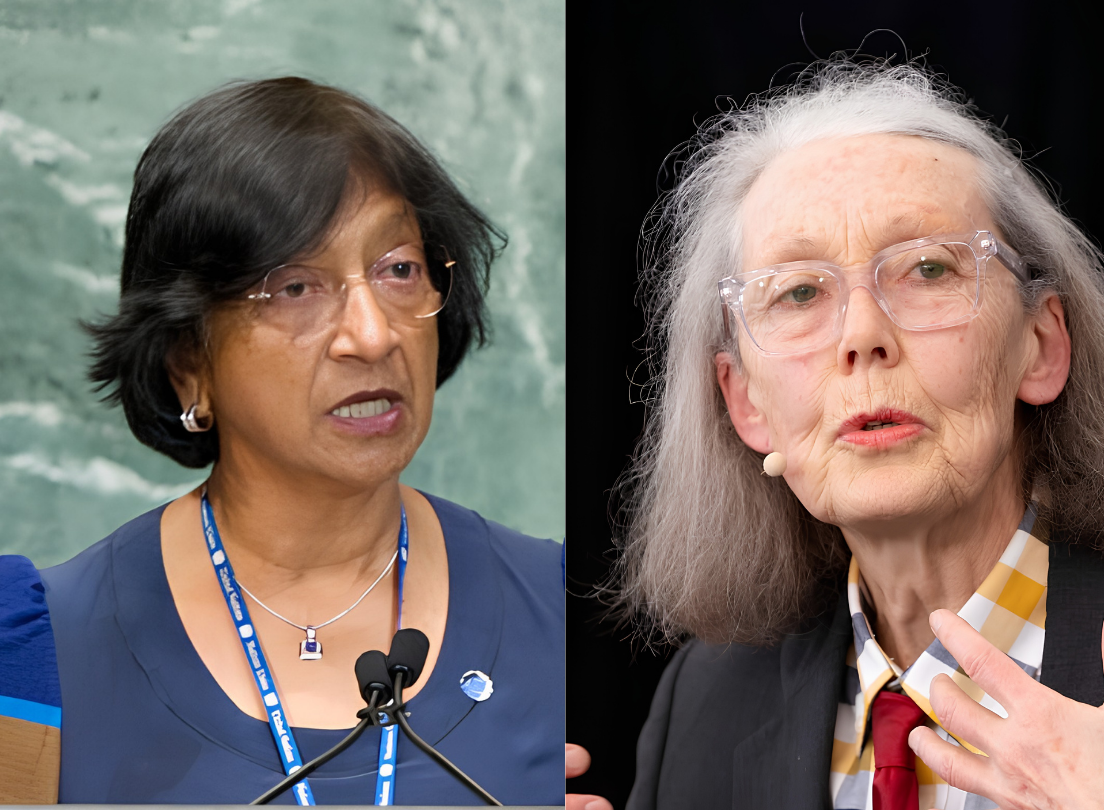
One has spent decades pushing the boundaries of international justice; the other has challenged the boundaries of literature itself. South African jurist Navi Pillay, winner of the 2026 Nobel Peace Prize, and Canadian writer Anne Carson, recipient of the 2026 Nobel Prize in Literature, have built careers around questioning established systems and expanding what is possible within their fields. Though their work belongs to different fields, both women have challenged established ways of thinking, expanding how we understand justice, human experience and the systems through which they are expressed.
Announced on October 9 and October 8, respectively, the awards recognise two women whose work has reshaped conversations about accountability, human rights and literary expression.
Navi Pillay: The jurist who helped advance international justice
At 85, Navanethem “Navi” Pillay has built a career around human rights, legal accountability and the prosecution of serious international crimes. Born in Durban, South Africa, in 1941 to a family of Indian Tamil origin, Pillay grew up under apartheid. She defended anti-apartheid activists and, in 1967, became the first woman to establish a law practice in what was then Natal Province. In 1995, she became the first non-white woman appointed to South Africa’s High Court.
Pillay later served as a judge and president of the International Criminal Tribunal for Rwanda, a judge at the International Criminal Court, and United Nations High Commissioner for Human Rights from 2008 to 2014. One of her most significant contributions came through the tribunal’s 1998 judgment against former Rwandan mayor Jean-Paul Akayesu. The landmark ruling established that rape and sexual violence could constitute acts of genocide when committed with the required intent to destroy a protected group. Pillay’s work helped advance international recognition of sexual violence as a serious crime.
From 2021 to 2025, she chaired the United Nations Independent International Commission of Inquiry on the Occupied Palestinian Territory, including East Jerusalem, and Israel. The commission concluded in 2025 that Israel had committed genocide in Gaza, a finding Israel has rejected. Pillay also serves as an ad hoc judge at the International Court of Justice in the case brought by The Gambia against Myanmar under the Genocide Convention.
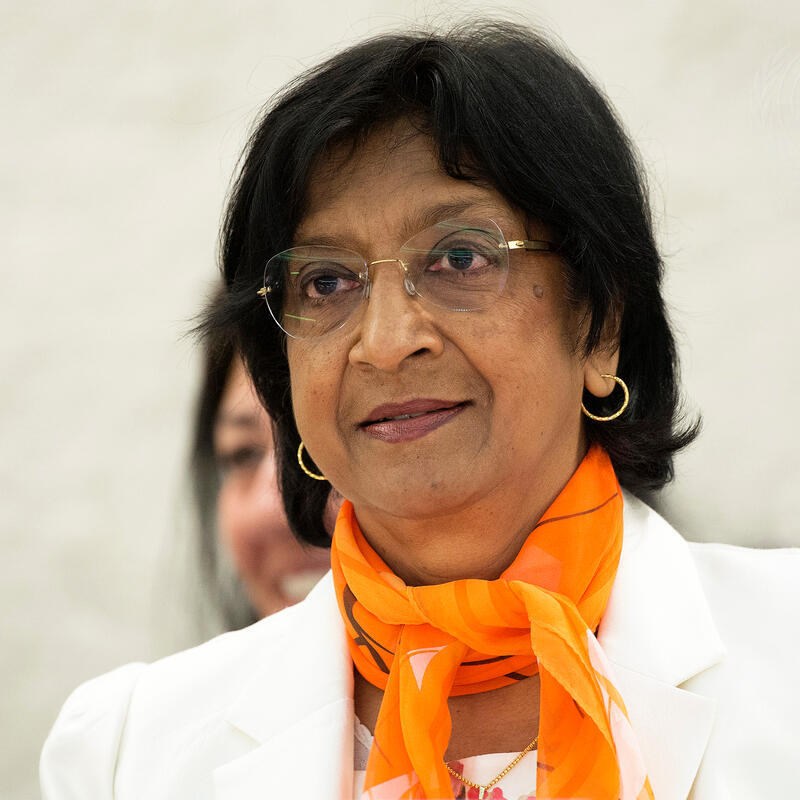
Her Nobel recognition comes as international legal institutions face political pressure and disputes over their authority. Pillay received news of the award while attending a legal conference in Nuremberg, Germany, and dedicated it to survivors of international crimes and those defending international justice.
Her career highlights the role legal institutions can play in documenting atrocities, recognising victims and pursuing accountability, even in politically contested cases.
Anne Carson: The writer challenging literary boundaries
Canadian poet, essayist, translator and classicist Anne Carson received the 2026 Nobel Prize in Literature on October 8. The Swedish Academy recognised her “bold and inventive oeuvre” and her ability to create new forms of contemporary literature through her engagement with classical traditions.
Carson, 76, moves between poetry, prose, scholarly criticism and translation. Drawing on ancient Greek literature and mythology, she explores love, identity, grief and human vulnerability. She studied classics at the University of Toronto, where she earned her bachelor’s, master’s and doctoral degrees, and later taught at universities in Canada and the United States. Her best-known works include Autobiography of Red, The Beauty of the Husband: A Fictional Essay in 29 Tangos and Nox. In Autobiography of Red, she reimagines Geryon, a winged monster from Greek mythology, as a contemporary character navigating love, identity and trauma.
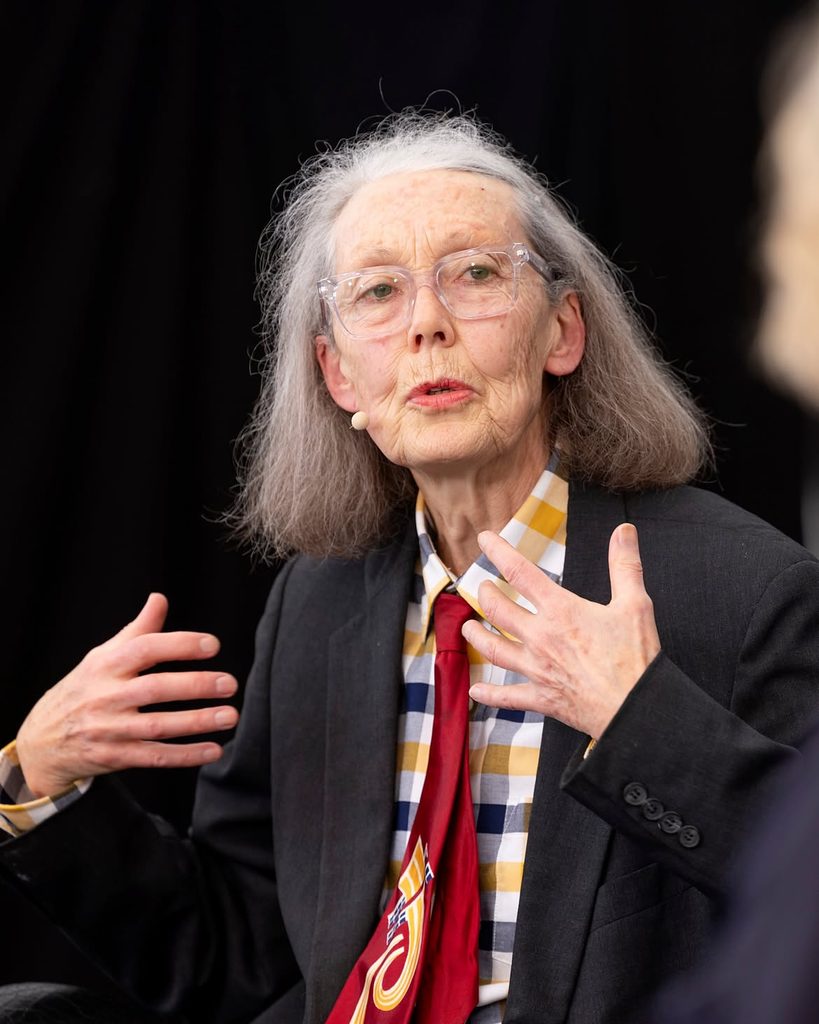
In Nox, an experimental work published in 2010, Carson uses images, letters and written fragments to reflect on the death of her estranged brother, Michael. The work explores how memory and surviving documents shape our understanding of another person’s life. Beyond books, Carson has collaborated with visual artists, choreographers, opera productions and theatre directors. In 2001, she became the first woman to win the T. S. Eliot Prize for The Beauty of the Husband. She has also received a MacArthur Fellowship and other literary honours.
Her Nobel Prize recognises a career that challenges conventional distinctions between poetry, prose, scholarship and visual art. By combining classical scholarship with literary experimentation, Carson continues to explore what literature can become.
Two women, two fields, and different kinds of influence
Pillay and Carson have pursued different paths, but both have challenged established boundaries. Pillay’s career demonstrates how international law can document atrocities and pursue accountability, while Carson’s writing brings classical traditions into conversation with contemporary experiences.
Their Nobel Prizes recognise work that extends beyond individual achievement, highlighting the influence women can have in shaping international justice and redefining literary expression.
