


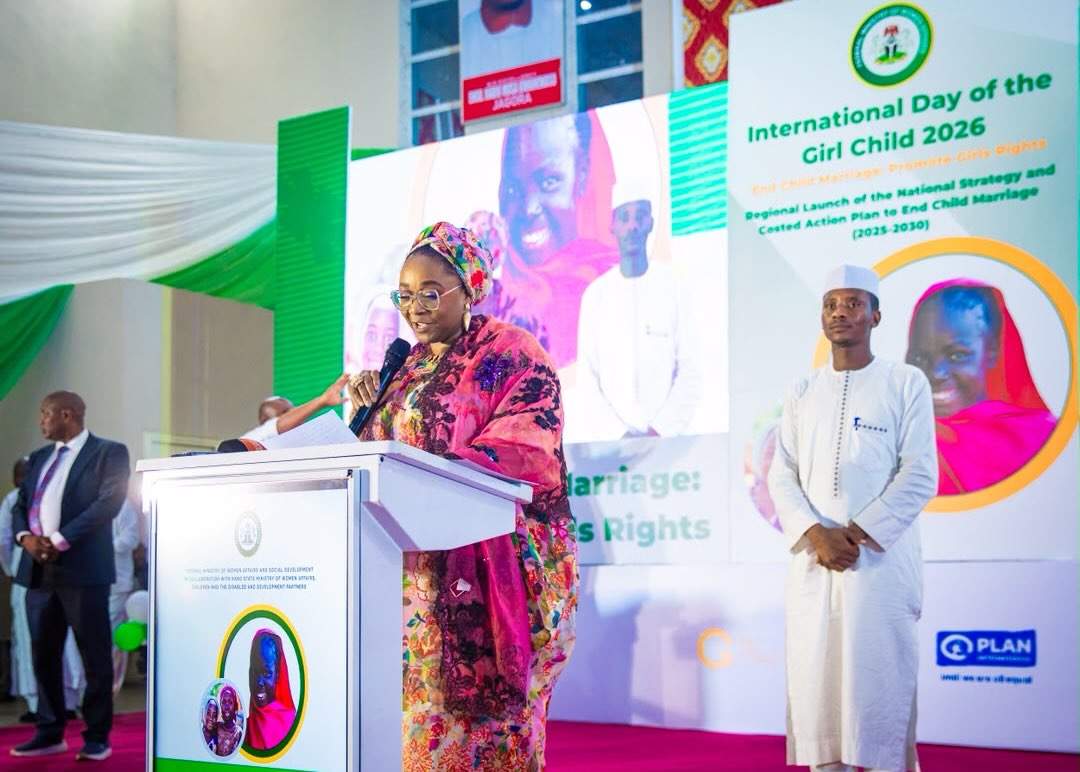
The Federal Government has launched a national strategy to end child marriage, keep girls in school and strengthen child protection in Nigeria’s North-West and North-East.
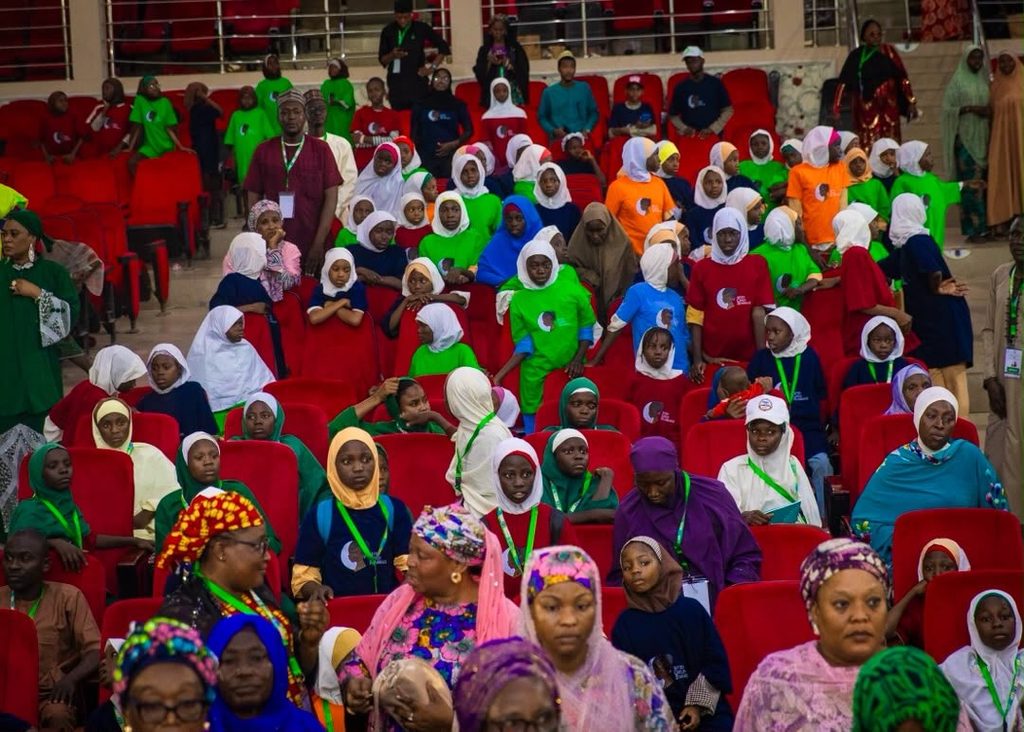
The National Strategy and Costed Action Plan on Ending Child Marriage in Nigeria (2025–2030) was unveiled in Kano by the Minister of Women Affairs and Social Development, Hajiya Imaan Sulaiman-Ibrahim, during the 2026 International Day of the Girl Child.
The strategy calls for coordinated action by federal and state governments, traditional and religious institutions, civil society organisations and development partners to address the poverty, insecurity, school exclusion, gender discrimination and harmful traditional practices driving child marriage.
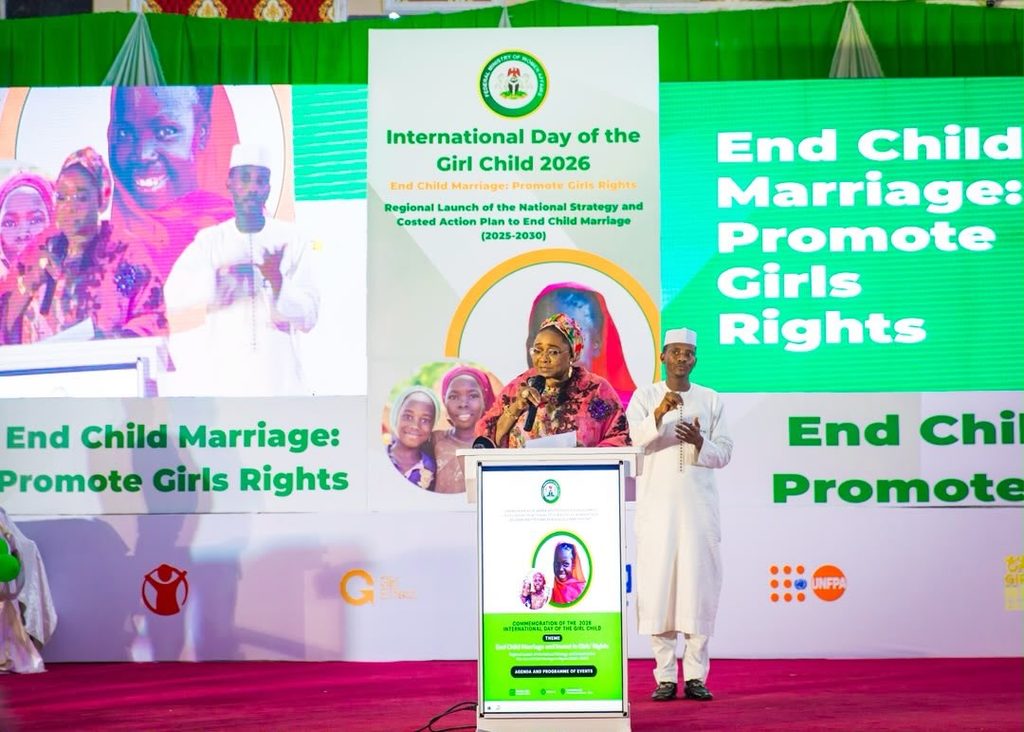
Sulaiman-Ibrahim said progress would be measured by the number of girls who stay in or return to school, stronger community protection, accessible support services and funding released for implementation.
She noted that child marriage disrupts education, exposes girls to early pregnancy and health risks, increases their vulnerability to violence and limits their economic independence, perpetuating poverty across generations.
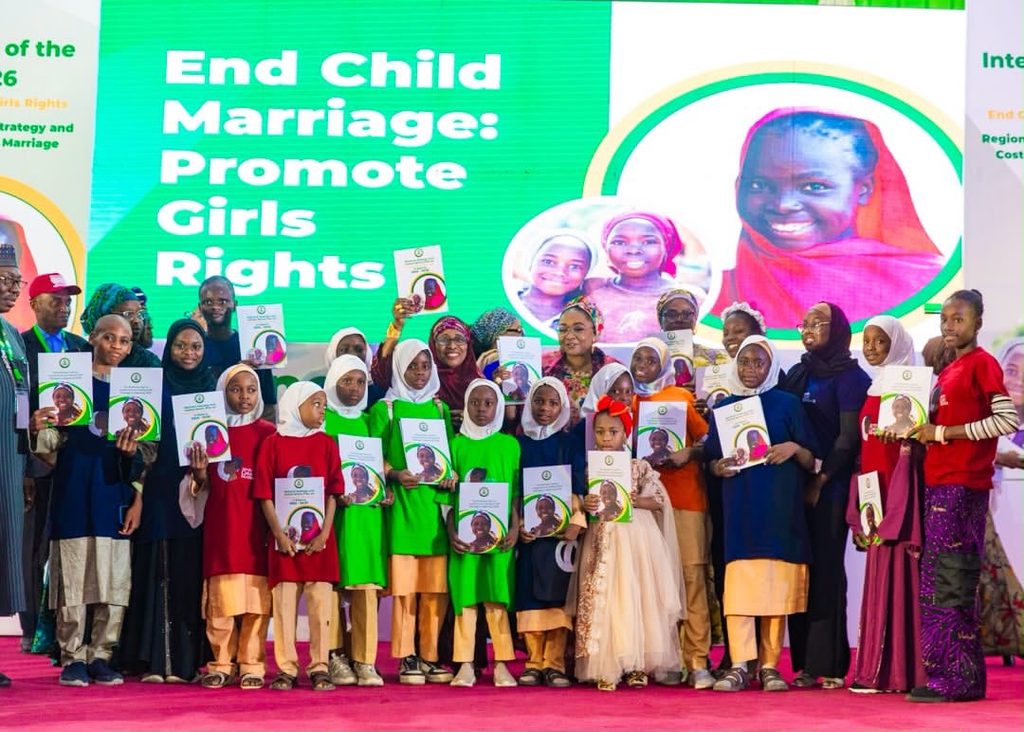
She called for stronger enforcement of the Child Rights Act, 2003, accessible reporting and referral mechanisms, school re-entry opportunities for girls whose education has been interrupted, confidential support for survivors of violence and livelihood assistance for vulnerable families.
The Chief of the United Nations Children’s Fund (UNICEF) Field Office in Kano, Shafeeq Ur-Rehman, highlighted the prevalence of child marriage, particularly in the two targeted regions.
Citing the 2024 Nigeria Demographic and Health Survey, he said approximately one in three young women nationally, and nearly one in two in the North-West and North-East, were married before age 18. Figures cited at the event put prevalence at 74 per cent in Bauchi, 72 per cent in Jigawa, 69 per cent in Katsina and 39 per cent in Kano.
Ur-Rehman urged state governments to translate the strategy into adequately funded programmes and stronger support services. Duncan Harvey, Country Director of Save the Children, also called for collective action to protect girls’ rights and end harmful practices.
The minister commended the Kano State Government for scholarships, free bus transportation for girls and school re-entry guidelines for married adolescent girls, urging other states to adopt similar measures.
She also called for safer schools, adequate sanitation and menstrual health facilities, vocational training and support for girls whose education has been interrupted.
The Kano State Commissioner for Women Affairs, Children and People with Special Needs, Hajiya Amina Sani, highlighted initiatives including the AGILE Project, the Girl Child Initiative and the Free and Compulsory Education Policy.
The strategy places funding, institutional accountability and measurable results at the centre of efforts to end child marriage. Its impact will depend on whether these commitments translate into sustained access to education, stronger protection services and practical support that enables girls to remain in school and complete their education.
