

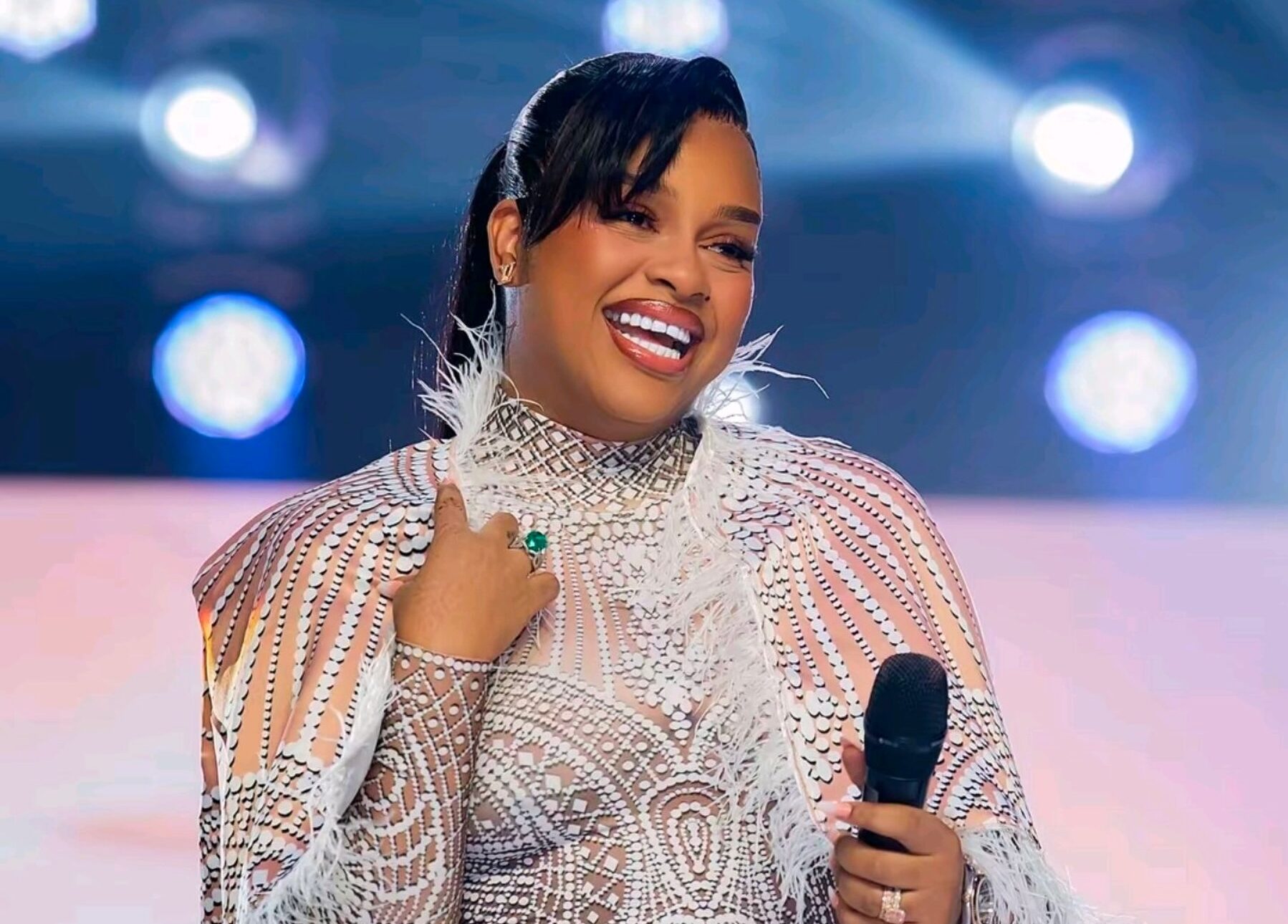
For Nandy, a performance at Miss Universe Tanzania ended with more than applause.
The Tanzanian singer has been fined TSh3 million after the outfit she wore during the pageant’s 2026 finale in Dar es Salaam was deemed inappropriate by the country’s National Arts Council, BASATA.
According to BASATA, the outfit did not meet standards relating to the dignity of viewers. The ruling placed what might ordinarily have been a fashion or styling choice into a very different category: one governed by public regulation.
Nandy was performing at the grand finale when she appeared in the lace outfit. Rather than contest the ruling, she admitted the violation, removed the performance video from her social media platforms and paid the fine. BASATA subsequently allowed her to continue her artistic activities under its supervision.
She was not the only one sanctioned. Millen Privé & Co. Lifestyle Limited, the organiser of Miss Universe Tanzania, was also fined TSh3 million and issued a warning over the incident.
But the interesting part of the story is not just the amount on the fine. It is what the incident says about the complicated space between fashion, performance and public expectations.
For performers, clothing is rarely just clothing. An outfit can be part of an artist’s visual identity, a performance choice or an extension of the music itself. On a stage, especially one built around entertainment and spectacle, styling is often part of what audiences have come to expect.
But performers do not operate in a vacuum. What is considered acceptable can change depending on the country, event, audience and institution. And when an institution has specific rules governing artistic and public appearances, an artist’s creative choice can become a regulatory issue.
BASATA says its action forms part of a wider effort to ensure that artists and event organisers comply with Tanzania’s laws, regulations and artistic guidelines. That creates a question that extends beyond Nandy’s performance:
When does an outfit stop being a matter of personal or artistic expression and become a matter for public regulation?
The question is particularly interesting in fashion because the boundaries around what women can wear in public are rarely universal.
An outfit can be described as glamorous in one setting, provocative in another and inappropriate in a third. The clothing itself may not have changed, but the expectations surrounding it have.
For artists, that means navigating more than trends. They are also navigating cultural expectations, event guidelines and, in some cases, formal regulations.
Nandy has now paid the price, quite literally. But the bigger conversation remains.
As African entertainment becomes increasingly global, performers are moving between different audiences, stages and cultural expectations. What happens when an artist’s creative expression meets a set of standards that defines the same expression differently?
For Nandy, it was a TSh3 million fine. For the rest of us, it is another reminder that sometimes what a woman wears can become much bigger than the outfit itself.
