


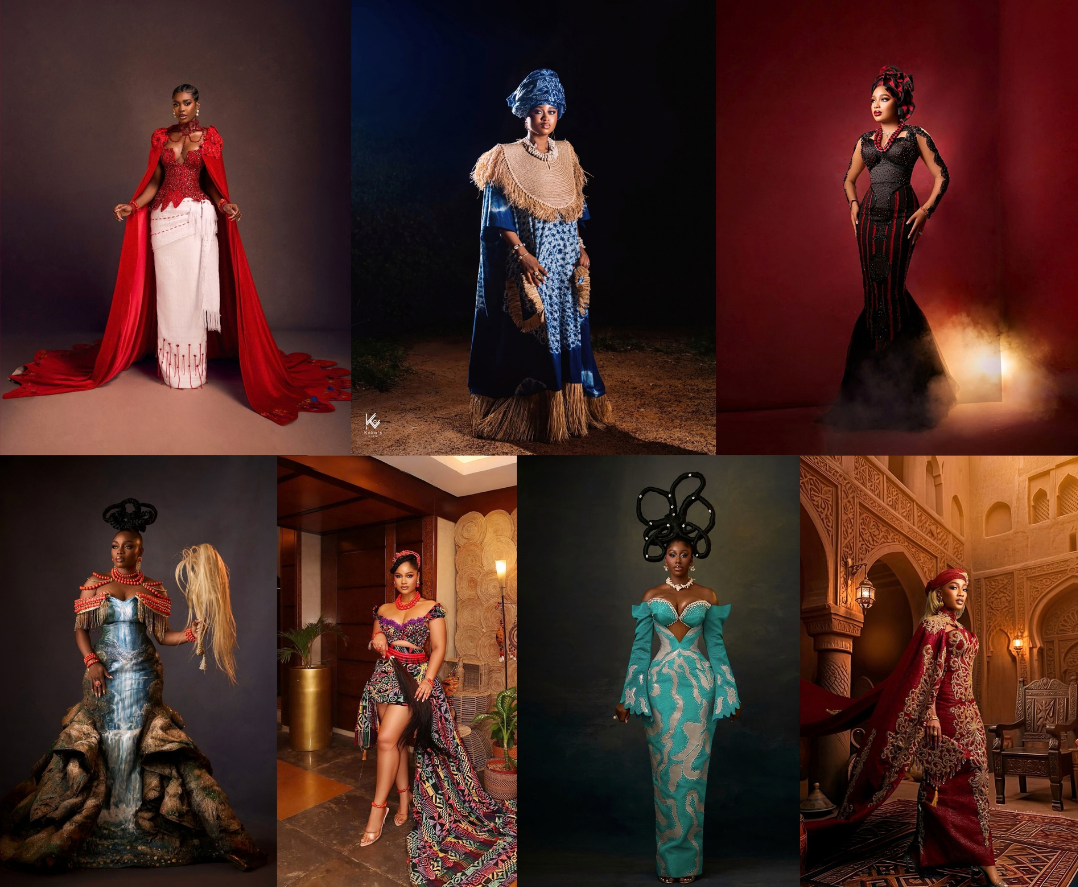
Ten standout looks from the 2026 AMVCA Cultural Night, where Nollywood stars, reality TV favourites and creatives traded gowns for the traditions they come from, and the women, designers, gele artists and bead makers behind each one.
1. Bisola Aiyeola, Igbo reimagined as art
Titled “Mmiri Ndu,” meaning Water of Life, Bisola Aiyeola’s gown was less a garment than a piece of sculpture brought to the red carpet. KGZ Opulence Couture built the piece around a hand-painted silk waterfall that cascaded the full length of the skirt, its surface catching light the way moving water does, while brown and moss-green elements curled around the fabric like rocks, tree bark and foliage gathered at a riverbank. From certain angles, the dress stopped reading as clothing altogether and became landscape, a small ecosystem stitched into couture, which is exactly why fashion writers could not stop talking about it long after the night ended.
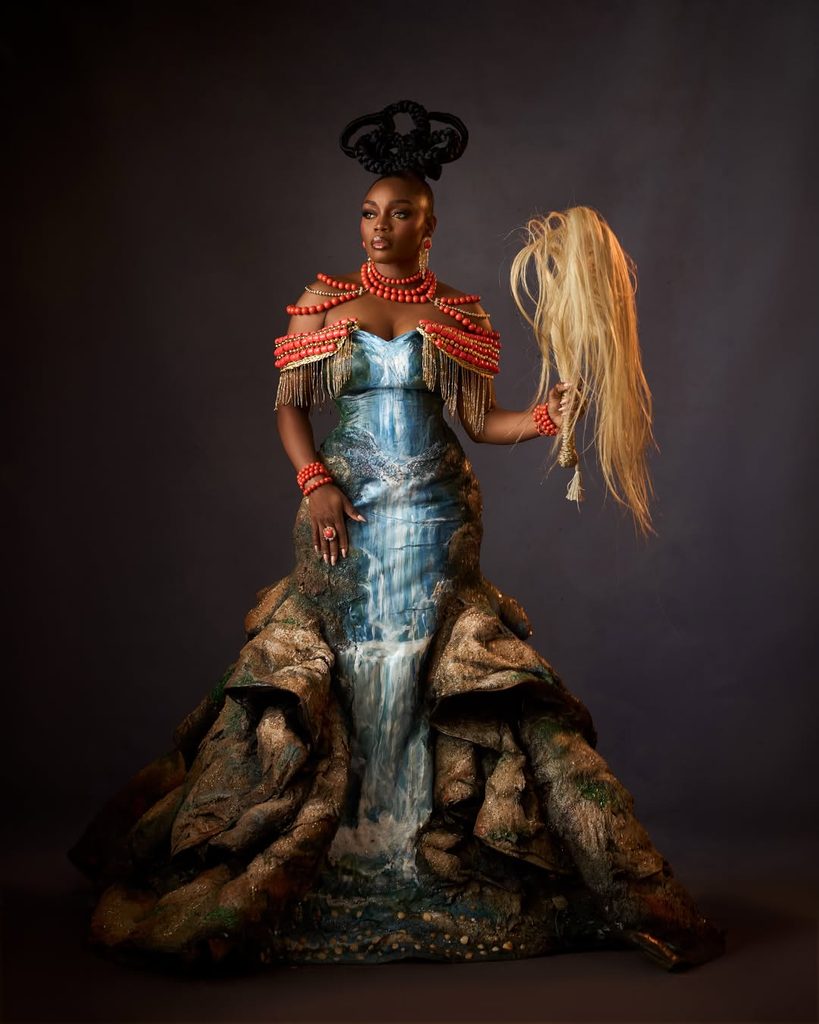
2. Imisi, adire and cowries
For the BBNaija Season 10 winner, culture showed up in texture as much as colour. Adire Oodua Hub, working with Dimeji Ilori, dressed Imisi in a blue and white adire gown, its indigo patterns hand-dyed in the tradition Yoruba women have practised for generations, then layered cowrie shells across the bodice and draped a woven mat over her shoulders like a second skin. She described the look herself as being wrapped in adire and crowned in cowries, carrying the spirit of her ancestors with every step, a line that captured exactly what adire’s continued presence on red carpets like this one is doing, keeping a centuries-old craft in active, living rotation rather than behind museum glass.
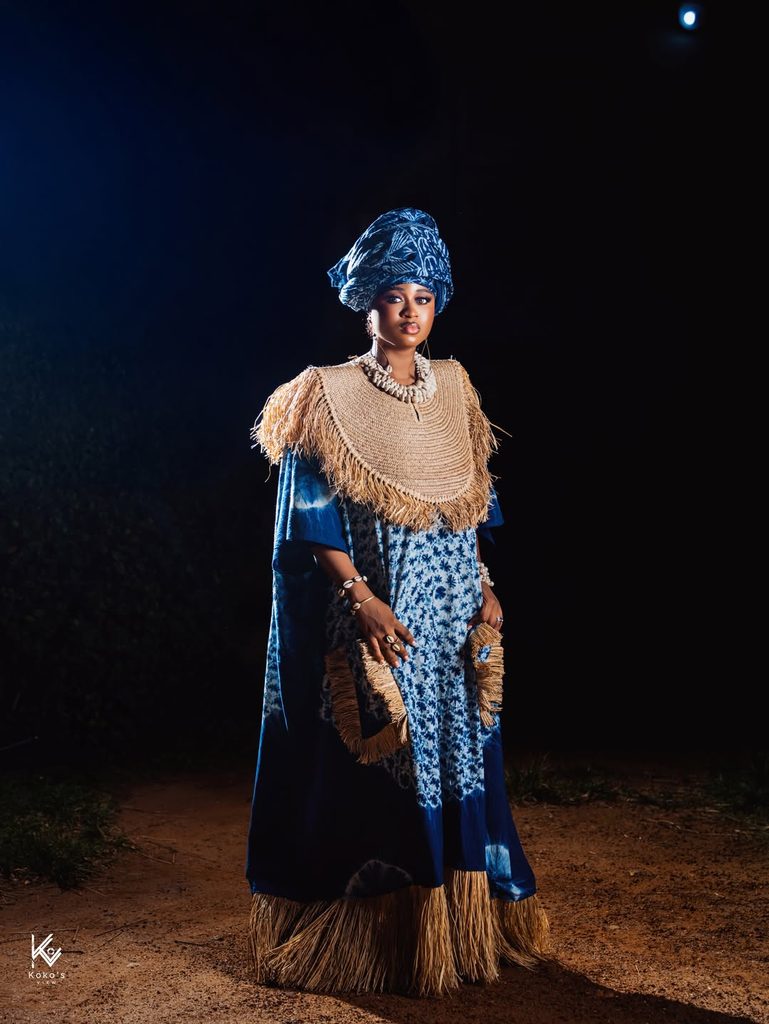
3. Dede, a modern Delta bride
BBNaija Season 10 first runner-up Dede chose to represent Delta State in a look she styled herself, and the result felt as thoughtful as it was polished. A fitted corset gave the outfit its structure, while a flowing floor-length silk cape fell behind her and softened the whole silhouette into something closer to ceremony than costume. She described the look as a reflection of modern heritage, pride and tradition, and the pairing of a contemporary corset with a cape that moved like royal robes showed how easily Delta identity can sit inside current fashion without losing its dignity.
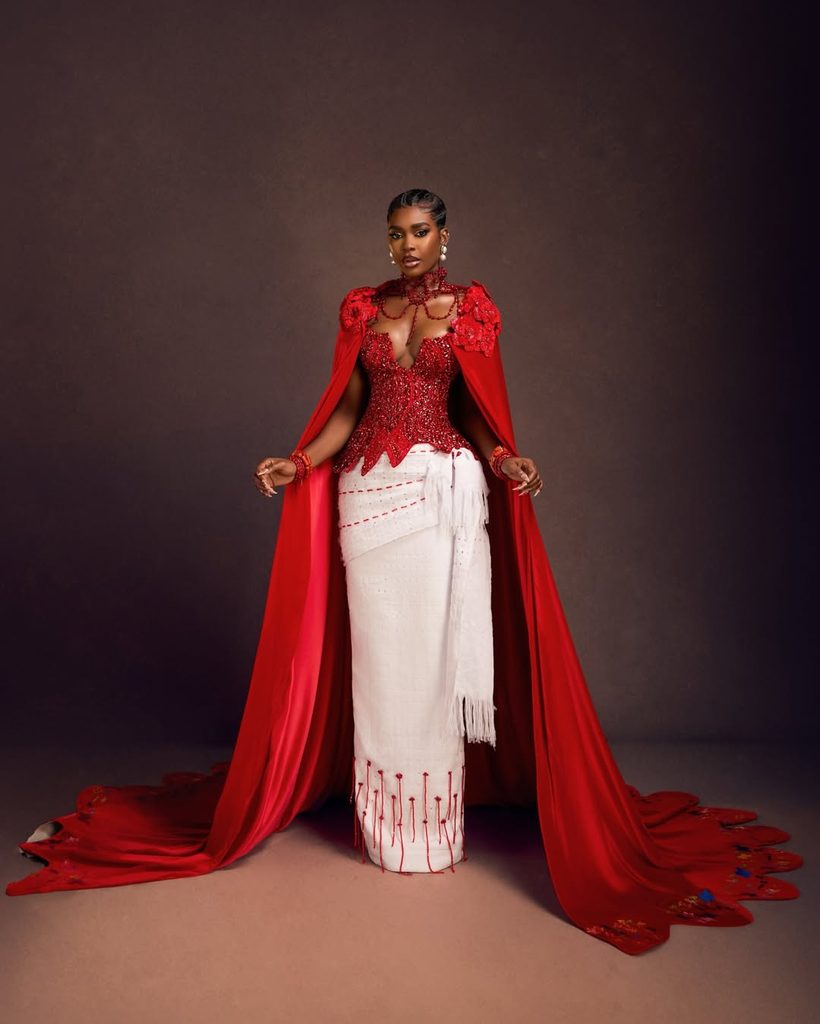
4. Nnenna “Nelly” Mbonu, Yoruba aso oke, modernised
The chef and influencer chose aso oke, the handwoven strip cloth that has anchored Yoruba ceremonial dress for centuries, and let Prudent Gabriel of Prudential Atelier prove it still has range. Rather than the boxy, structured silhouettes aso oke is traditionally cut into, Mbonu’s design moved with her, tailored close through the body before opening into movement, a reminder that heritage fabric does not have to choose between honouring its roots and looking thoroughly current.
5. Mojibade Sosanya, the Tiv first lady
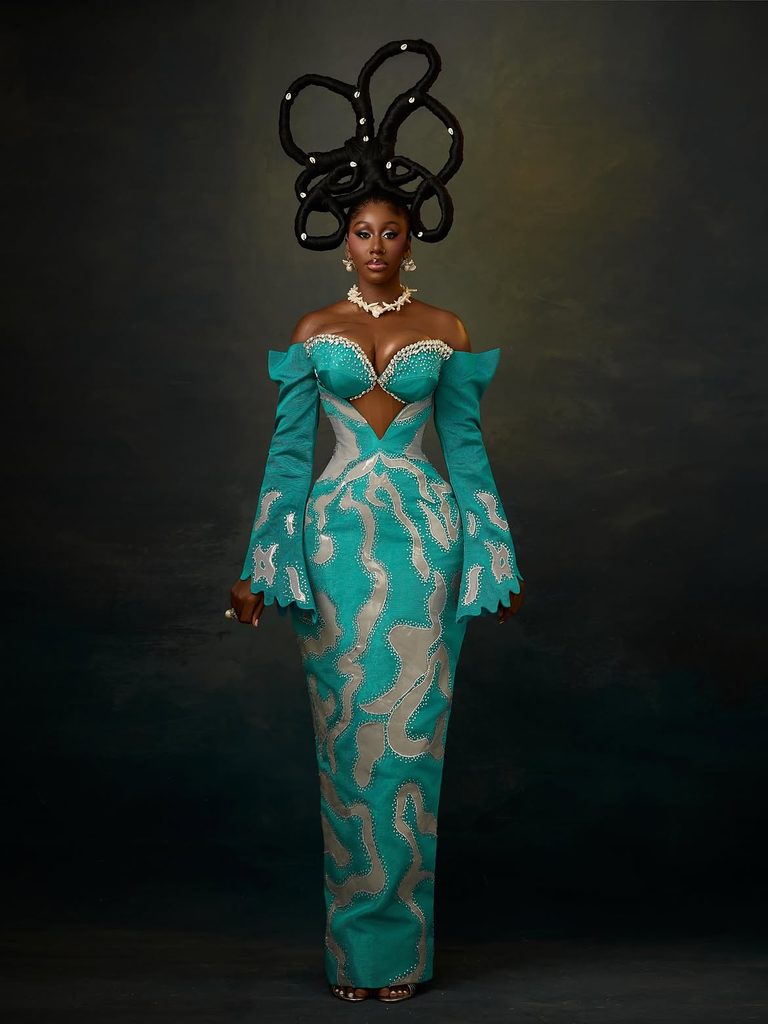
The award-winning MC stepped out as the First Lady of the Tiv Kingdom, dressed by Caramela Coutures in the black and white patterned fabric closely associated with Tiv identity in Benue State. The graphic, high-contrast print stood apart from the coral and aso oke dominating much of the carpet, a reminder of just how wide Nigeria’s cultural fashion vocabulary actually runs once you look past the more commonly referenced traditions.
6. Sunshine Rosman, an Igbo bride in full beadwork
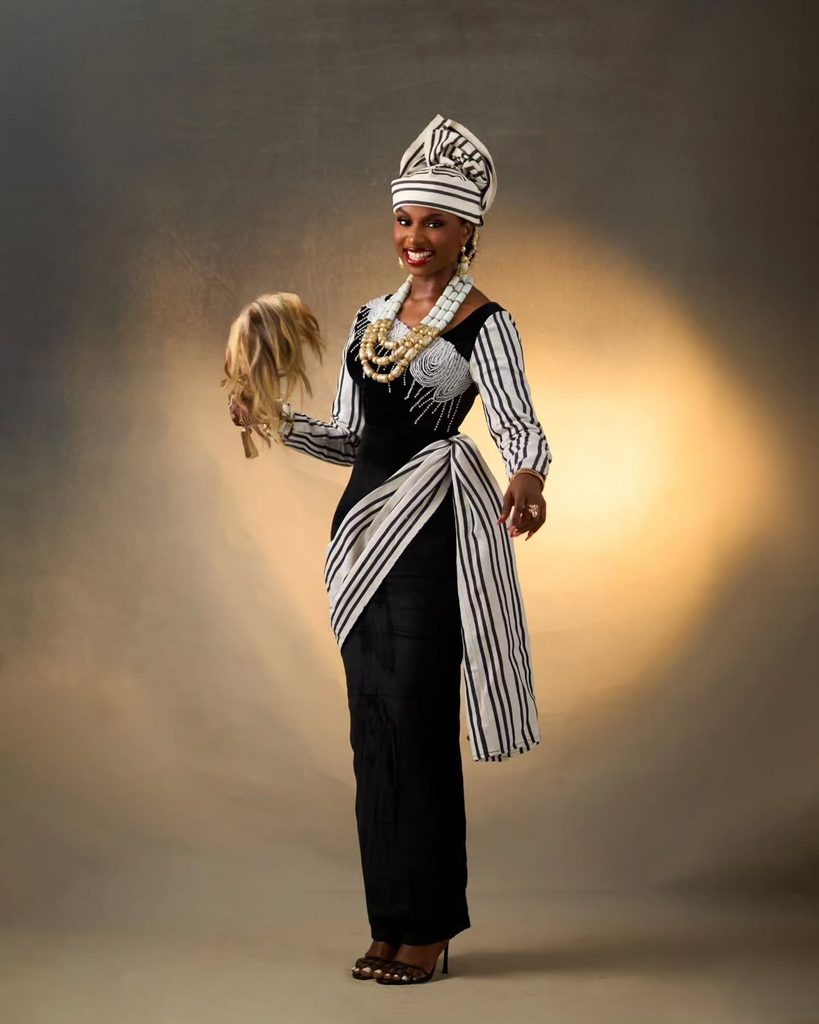
Sunshine Rosman brought Igbo bridal glamour to the carpet in a look built on expert beading and precise styling, with creative direction from Ayams Styles, beadwork on the dress by Jetba Beads and accessories from Luna x Beads. The finished effect was editorial without losing its cultural footing, and it carried the energy of the moment in an Igba Nkwu ceremony when the bride dances out with her maidens to greet her family, proof that traditional bridal dressing can be every bit as theatrical as high fashion.
7. Mercy Eke, the Edo bridal statement
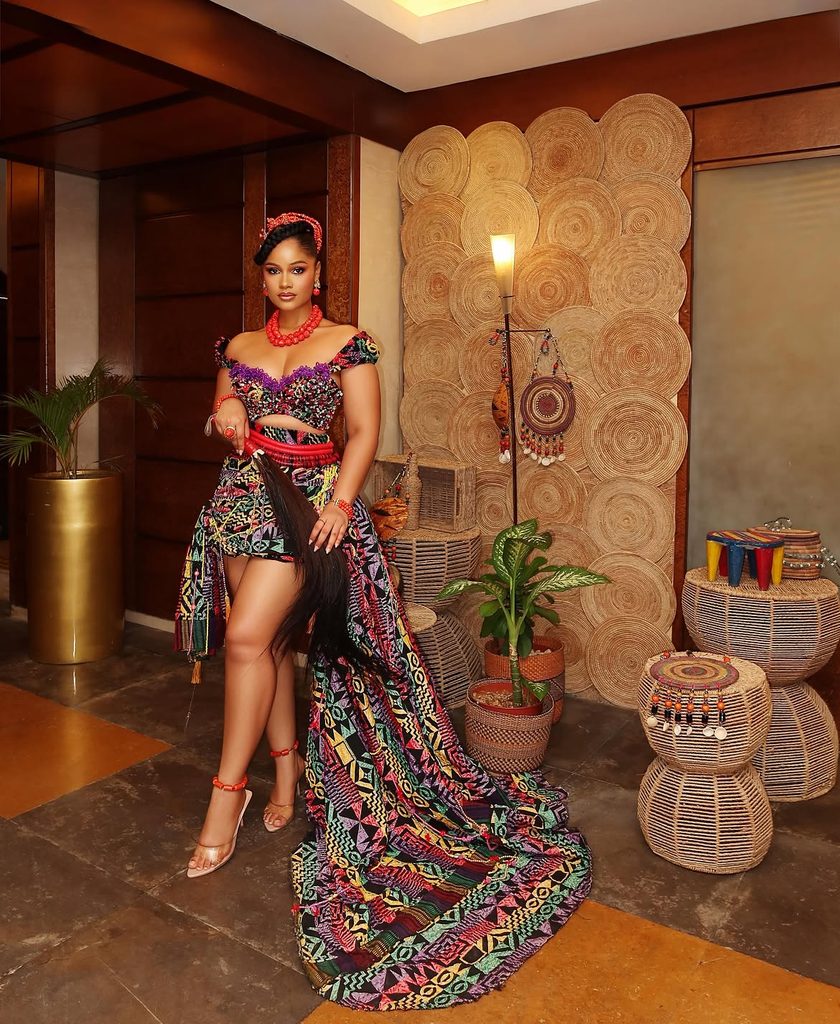
Mercy Eke was already tipped as a best dressed contender before the night began, and she delivered by placing the Edo Okuku, the coral-beaded crown fixed into a high bun, at the centre of her look. Amy Aghomi designed the outfit and a specialist Okuku stylist shaped the crown, which together gave the look both couture polish and real traditional weight. She said she was honouring the beauty, royalty and heritage of Edo culture, and the result felt like a full traditional experience rendered with modern precision rather than a costume lifted from a history book.
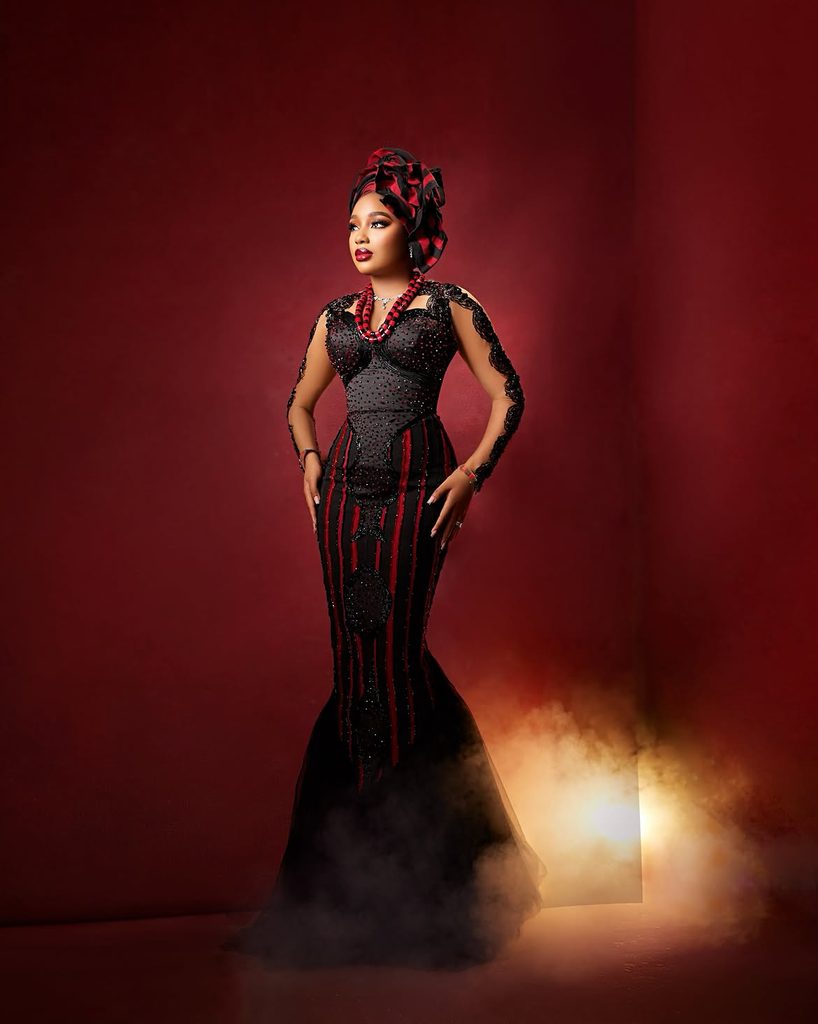
8. Kiky Festus, an Idoma bride in red and black
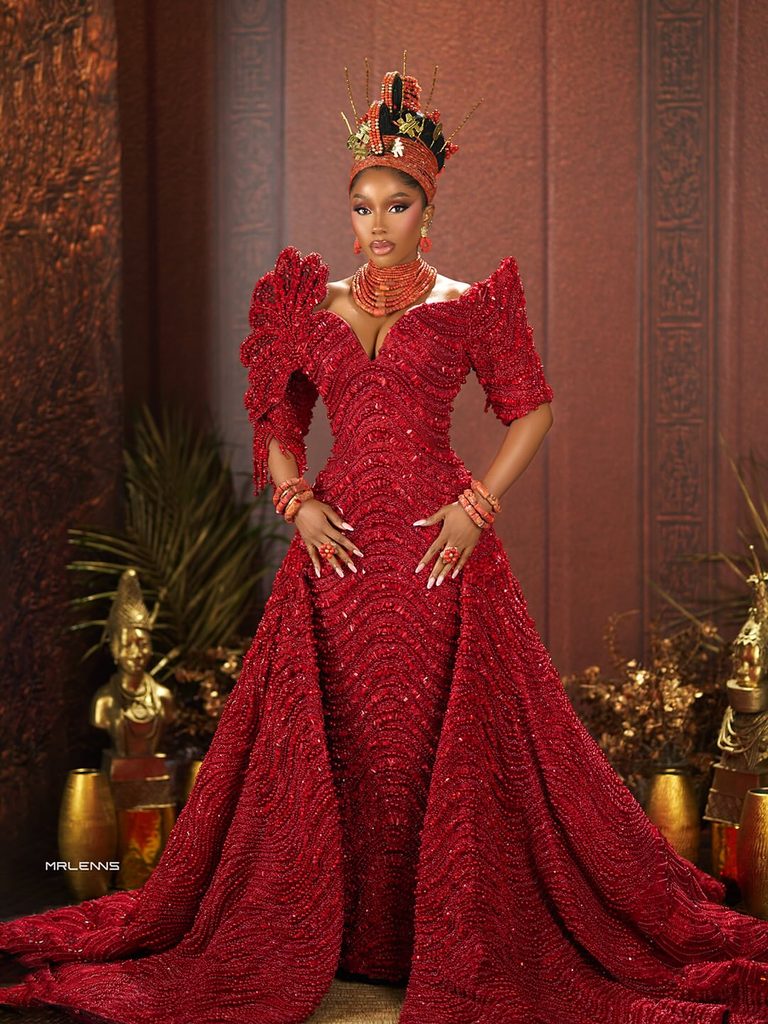
Daemi.ng dressed Kiky Festus in the red and black that has long signalled Idoma identity, a colour pairing with deep ceremonial roots among the Idoma people of Benue State. Against a carpet crowded with pastels and metallics, the boldness of the palette alone made her look impossible to scroll past.
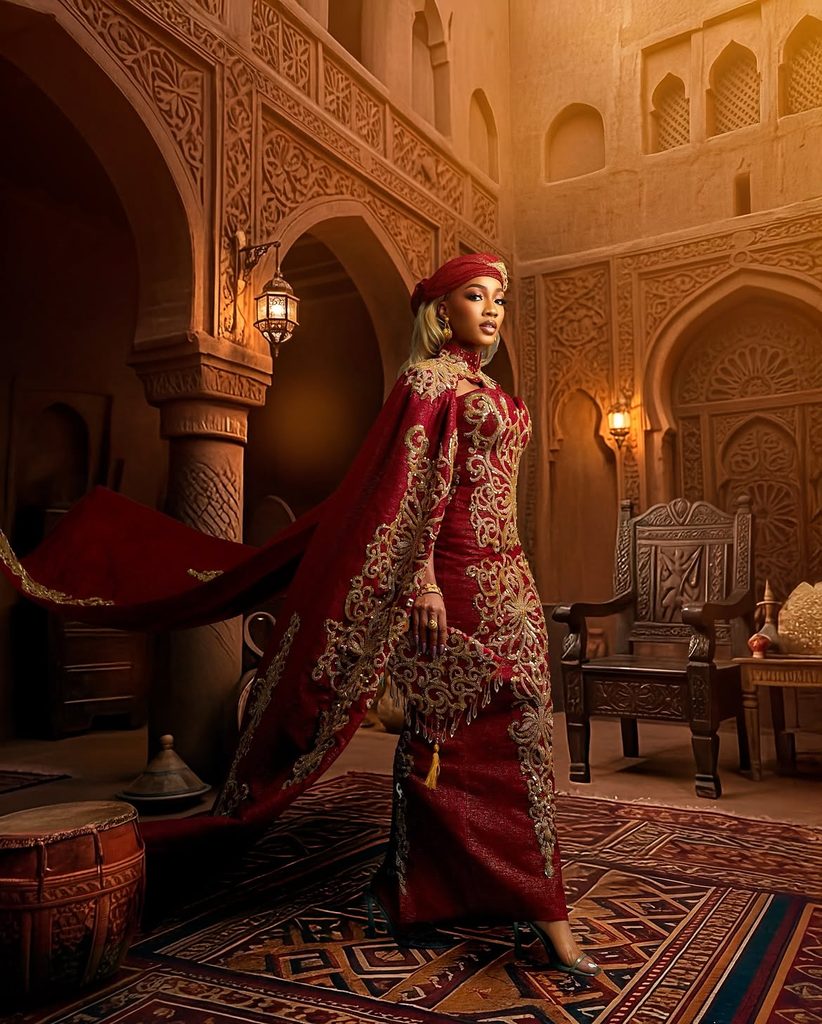
9. Hawa Magaji, the Northern belle
Representing Hausa-Fulani heritage meant leaning into softness rather than spectacle. Omalified dressed Hawa Magaji in flowing silhouettes finished with intricate embroidery, the kind of fine needlework that takes patience rather than shortcuts, while Chizzy’s Gele built a turban that framed her face without ever weighing the look down. The result carried the quiet elegance Northern Nigerian dress is known for, proof that restraint can command a red carpet just as effectively as volume does.
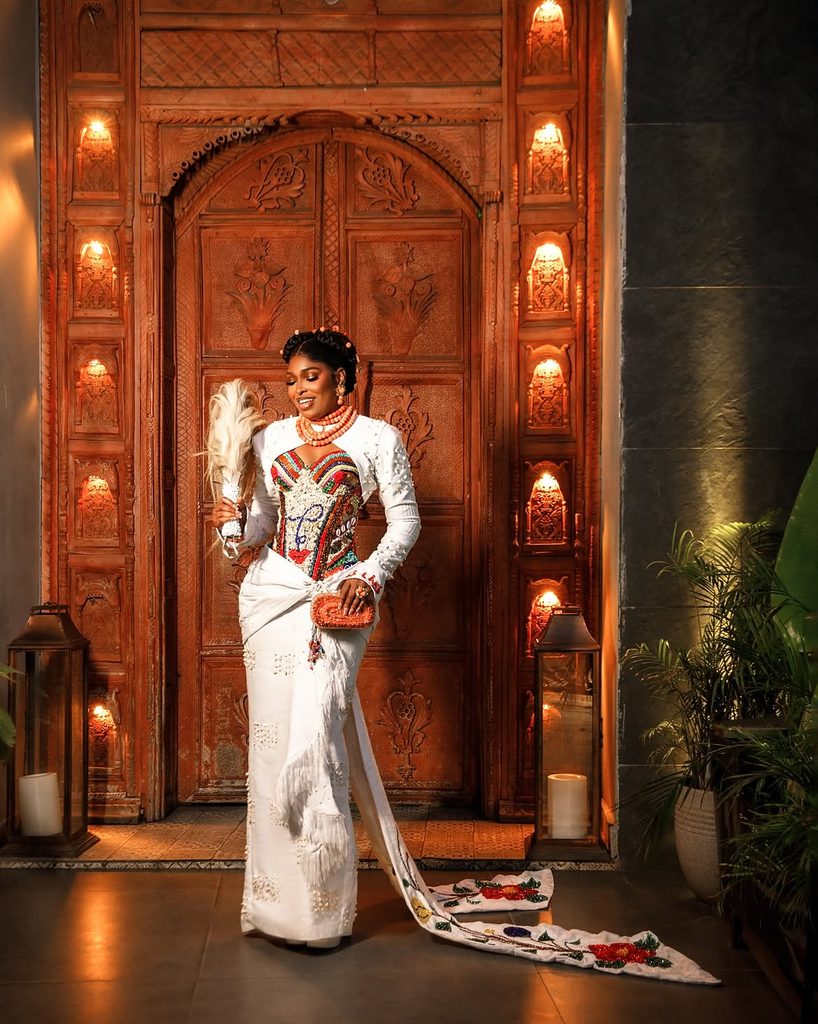
10. Thelma Lawson, Delta Igbo, with masquerade
Pepple Robert built Thelma Lawson’s look around two things rarely paired together on a red carpet, Anioma masquerade tradition and Akwa Ocha, the handwoven white cloth historically reserved for Igbo titled men and women. The masquerade references nodded to a practice still central to Anioma spiritual and cultural life, reworked here into a modern silhouette that kept the look wearable rather than costume-like, a balancing act that is harder to pull off than it looks.
Bonus mentions
Tobi Bakre brought Yoruba royalty in an agbada by Deji and Kola, complete with a custom brass staff, while Queen Mercy Atang’s dress, inspired by Agege bread, was also among the most talked-about looks of the night.
