


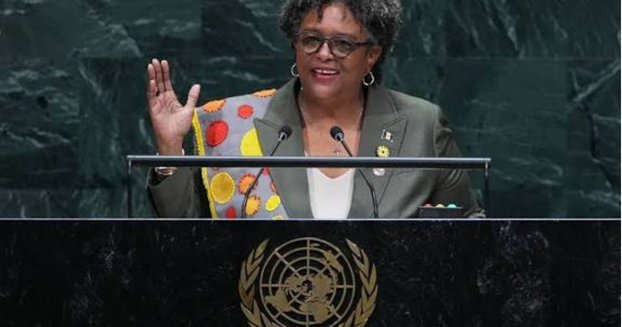
The 81st session of the United Nations General Assembly opened on September 8, 2026, at the UN Headquarters in New York, bringing together representatives of the organisation’s 193 member states.
Held under the theme “Restoring Trust, Managing Transformation: A United Nations That Delivers for All,” the session has addressed issues including peace and security, development, human rights and international cooperation. The high-level General Debate took place from September 22 to 26, with an additional sitting on September 28.
While much of the attention around UNGA centres on presidents, prime ministers and international diplomacy, several issues discussed during this session have direct implications for women, from political leadership and artificial intelligence to conflict, funding and the future of institutions working on gender equality.
Here are the key things women should know.
Gender Equality Is Still 171 Years Away, UN Report Finds
UN Women and the UN Department of Economic and Social Affairs released the Gender Snapshot 2026 on September 17, ahead of the high-level debate.
The report found that, at the current rate of progress, full gender equality is 171 years away, while none of the indicators under Sustainable Development Goal 5, which focuses on gender equality, are on track to meet their 2030 targets.
Women also remain significantly underrepresented in decision-making. The report estimates that parity in national parliaments is still 63 years away. Of 175 chief justices globally, 144 are men and 31 are women, while nearly nine in 10 defence ministers and more than eight in 10 finance ministers are men.
It also found that 32 per cent of national gender equality mechanisms surveyed reported losing institutional power over the previous two years.
The gender gap is not only about how many women are represented. It is also about who controls budgets, makes laws and has the authority to shape and implement policy.
A Woman Could Lead the UN for the First Time
The assembly comes as the UN selects its next Secretary-General. António Guterres will complete his second term at the end of 2026, after which the organisation will appoint its 10th Secretary-General.
No woman has held the position since the UN was established in 1945. UN Women has highlighted the selection process as an opportunity to address that gap, with women among those being considered for the position.
The selection is still ongoing, so the outcome has not been decided.
The process has renewed attention on women’s access to the highest levels of global decision-making and whether institutions advocating gender equality also reflect it in their leadership.
AI Is Becoming a Women’s Rights Issue
AI featured prominently in discussions around UNGA 81, including its effects on work, development, governance and human rights.
UN Women called for women to have a meaningful role in shaping AI and the rules governing it. The organisation also addressed technology-facilitated violence against women and girls, including new forms of online abuse and technology-enabled attacks.
AI’s impact on employment is another concern as businesses increasingly adopt automation and AI tools.
The issue is not simply whether women can use AI. It is who builds and regulates it, whose experiences shape the technology and what protections exist when it is used to harm women. Women’s participation in AI could also affect their future economic opportunities.
Why Women’s Voices Matter in Peace and Security
The Women, Peace and Security Focal Points Network held a ministerial meeting during UNGA 81 to mark its 10th anniversary and discuss women’s participation in peace and security decisions.
The agenda covers women’s involvement in conflict prevention, peace negotiations, peacebuilding and security institutions.
Conflict can disrupt women’s access to healthcare, education, housing and livelihoods and expose women and girls to displacement and violence. Yet women remain underrepresented in many peace and security processes. Their participation can determine whether their experiences and needs are reflected in decisions about conflict and recovery.
Gender Equality Needs More Than Promises
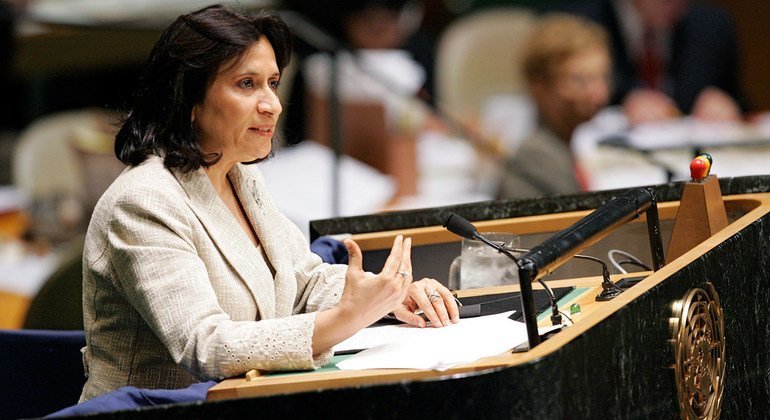
UN Women also convened its UNGA Platform of Women Leaders, focusing on women’s participation and leadership, gender-responsive policymaking and financing for the Sustainable Development Goals.
The emphasis on funding is significant. The Gender Snapshot found that 32 per cent of national gender equality mechanisms surveyed had experienced a decline in institutional power, alongside concerns about funding and accountability.
Policies do not implement themselves. Without adequate funding, staff and institutional authority, commitments to women can remain on paper. Government budgets and the strength of gender-equality institutions therefore matter as much as public promises.
UN Reform Could Reshape Institutions Working on Women’s Rights
The assembly is also taking place alongside the wider UN80 reform process, which is reviewing how the UN operates and uses its resources.
One proposal under consideration is a possible merger between UN Women and the UN Population Fund (UNFPA). The merger has not been finalised. At its September 2026 Executive Board session, UN Women said members were not yet in a position to recommend it and called for alternative arrangements to continue to be explored.
Changes to UN institutions can affect how programmes addressing gender equality, women’s empowerment and sexual and reproductive health are funded and coordinated. Women will therefore have a stake in what the eventual reform looks like.
What UNGA 81 Means for Women
UNGA 81 has placed several issues affecting women in the same global conversation: political power, leadership, AI, safety, conflict, funding and institutional accountability.
The Gender Snapshot 2026 provides one of the clearest measures of the challenge: gender equality remains 171 years away at the current rate of progress, and no SDG 5 indicator is on track for 2030.
The discussions at UNGA 81 therefore go beyond increasing women’s representation. They raise questions about whether women have real decision-making power, access to resources and a meaningful role in shaping the systems that affect their lives.
