


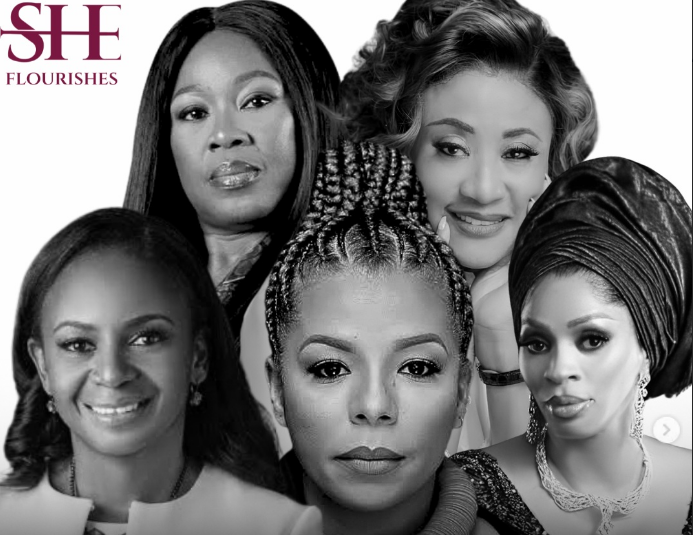
Nigeria’s biggest business stories often have familiar protagonists: the founders, billionaires and corporate leaders whose names have become closely associated with the companies they built.
But behind some of these business empires are women whose own professional contributions are worth examining.
Nana Otedola, Awele Elumelu, Shade Okoya, Kay Ovia and Chioma Ekeh are all connected to some of Nigeria’s most prominent business families. Yet their professional identities extend beyond their relationships.
They have founded businesses, led companies, worked across sectors and taken on responsibilities that contribute to the growth of established institutions.
The interesting question, then, is not simply who these women married. It is what they are building, leading and contributing to the businesses around them.
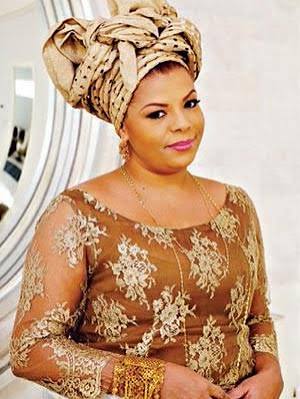
Nana Otedola: Building a business of her own
Nana Otedola is widely known as the wife of businessman Femi Otedola, but her own entrepreneurial story began long before the family became one of Nigeria’s most recognisable business names.
In 1999, she founded Garment Care Limited, a premium laundry and dry-cleaning company.
The business gives Nana a professional identity beyond her connection to one of Nigeria’s wealthiest families. Rather than operating solely within the larger Otedola business story, she built a company in a different sector and developed it into an established enterprise.
Her story offers a useful reminder that entrepreneurship within a prominent family does not always mean joining the family’s flagship business.
Sometimes it means building something entirely separate. For Nana, that has meant creating and managing a business in the service industry, demonstrating that her contribution to the family’s wider story is not limited to her personal relationship with its most prominent figure.
Awele Elumelu: Building across healthcare and entrepreneurship
Dr Awele Elumelu has built a career at the intersection of healthcare, business and entrepreneurship.
A medical doctor by training, she is Chairperson of Avon Healthcare Limited and Avon Medical Practice, giving her a leadership role within Nigeria’s private healthcare sector.
Her work reflects an understanding of healthcare not only as a medical service but also as an institution that requires effective management, investment and long-term strategy.
Awele is also involved in the Tony Elumelu Foundation, where she has contributed to programmes focused on African entrepreneurship and enterprise development.
This gives her professional portfolio two distinct but connected dimensions: healthcare leadership and entrepreneurship development.
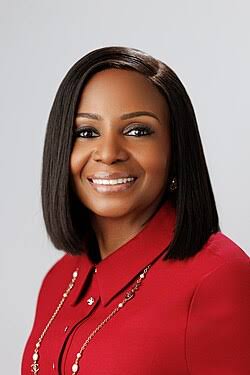
Shade Okoya: Taking on leadership within a manufacturing empire
Shade Okoya’s professional story is closely connected to Eleganza, the manufacturing business established by her husband, Razaq Okoya.
But her role within the company has moved beyond association with the family.
As Managing Director of Eleganza Industrial City, she holds an executive position within one of Nigeria’s established manufacturing businesses.
That makes her story particularly relevant to the question of succession and continuity in family-owned businesses.
Building a successful company is one challenge. Ensuring that it remains competitive and relevant across generations is another.
Shade’s transition into executive leadership shows how the next phase of a family business can involve women taking on operational and strategic responsibilities within institutions that were built before them.

Kay Ovia: Connecting technology and financial services
Kay Ovia’s professional career sits at the intersection of technology, finance and investment.
She serves as Chairman of Cyberspace Limited, a technology company established by Jim Ovia that has provided technology solutions to financial institutions, telecommunications companies and other organisations.
Her role places her within a sector that has become increasingly important to how businesses operate in Nigeria.
Kay also serves as Managing Director and Chief Executive Officer of Quantum Markets Limited, giving her leadership responsibilities within the financial markets space.
Together, these roles reflect a career that spans two closely connected parts of the modern economy: technology and finance.
Her contribution is significant not because she is connected to one of Nigeria’s most recognisable banking figures, but because she operates within sectors that have helped shape the country’s digital and financial infrastructure.
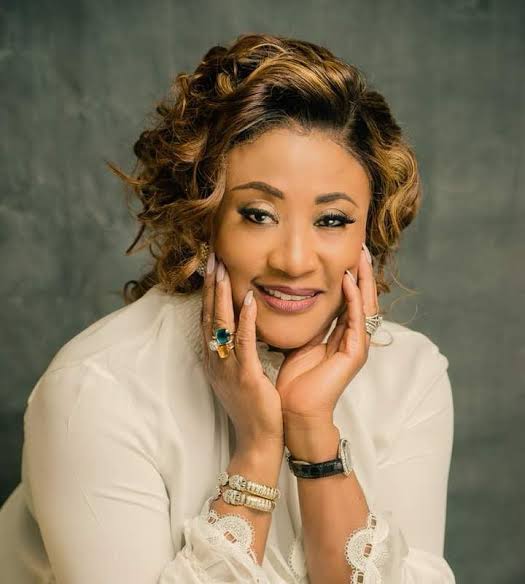
Chioma Ekeh: Leading in Africa’s technology distribution market
Chioma Ekeh occupies a senior leadership position in one of Nigeria’s most important technology businesses.
As Chairman of TD Africa, she operates within the technology distribution sector, where the company connects global technology brands with businesses and consumers across Africa.
Her role places her at a critical point in the technology value chain.
While technology entrepreneurs often receive attention for developing products or founding companies, distribution is what helps technology reach the businesses and consumers that use it.
Chioma’s leadership within TD Africa therefore contributes to a less visible but important part of the continent’s technology ecosystem.
Her career also demonstrates how women can exercise leadership in sectors traditionally associated with male executives. Rather than simply being described through her connection to Zinox founder Leo Stan Ekeh, her professional record can be examined through the business she helps lead and the technology ecosystem in which she operates.

The bigger business story
Looking at these women through their professional contributions changes the conversation.
Nana Otedola is an entrepreneur who built a business outside her husband’s core business interests.
Awele Elumelu combines healthcare leadership with entrepreneurship development.
Shade Okoya holds an executive role within a major manufacturing enterprise.
Kay Ovia operates across technology and financial services.
Chioma Ekeh leads within one of Africa’s technology distribution businesses.
Their paths are different, but they share one important feature: their professional identities can be discussed without beginning or ending with their husbands.
