


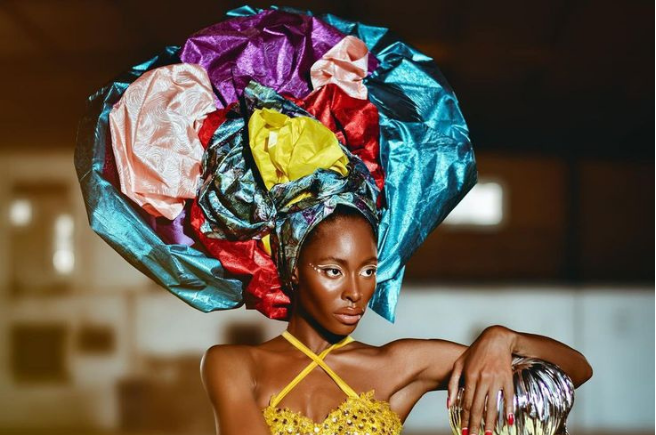
For decades, Nigerian women wore the gele mainly to weddings and owambes, occasions where the aso ebi had already been decided and the outfit was meant to draw attention the moment a woman walked into the room. The rule was straightforward, the bigger the event, the bigger the gele, with fabric stacked into tall, structured peaks that made clear how important the occasion was.
That version of the gele has not disappeared, and it probably never will, but it has stopped being the only version worth talking about.
As Nigerian women grow bolder and more experimental with occasionwear, the gele is being handed new proportions, unexpected colour pairings and companions it was never traditionally seen with.
A headwrap that once felt inseparable from lace and matching aso ebi now sits comfortably above a tailored suit or a plain dress. While a large, dramatic shape also used to be the default for making an impression, it can now be swapped for something compact, or folded off centre on purpose, which reads as more casual and more personal than a perfectly symmetrical style.
None of this makes the gele any less Nigerian. If anything, it proves how much room the headwrap has always had for interpretation, and Nigerian women are finally claiming that room. From the way it is shaped to the colours it is dared to sit beside, here are four of the boldest ways Nigerian women are reinventing a piece of clothing that fashion once tried to box in:
1. Smaller, more structured shapes take over
The oversized gele still earns its place, especially when an occasion calls for full-scale glamour and nothing less will do, but smaller, more structured shapes are steadily changing what it means to wear one well.
By pulling the fabric closer to the head and sharpening every fold into something more deliberate, these compact styles create a cleaner silhouette than the towering versions that have long dominated Nigerian occasionwear, and because the gele no longer claims most of the visual space, the outfit underneath finally gets a real chance to be seen.
The effect is subtle on paper but transformative in practice, since a smaller gele can make an entire outfit feel polished and contemporary while still holding on to the unmistakable character that only a traditional headwrap can bring.
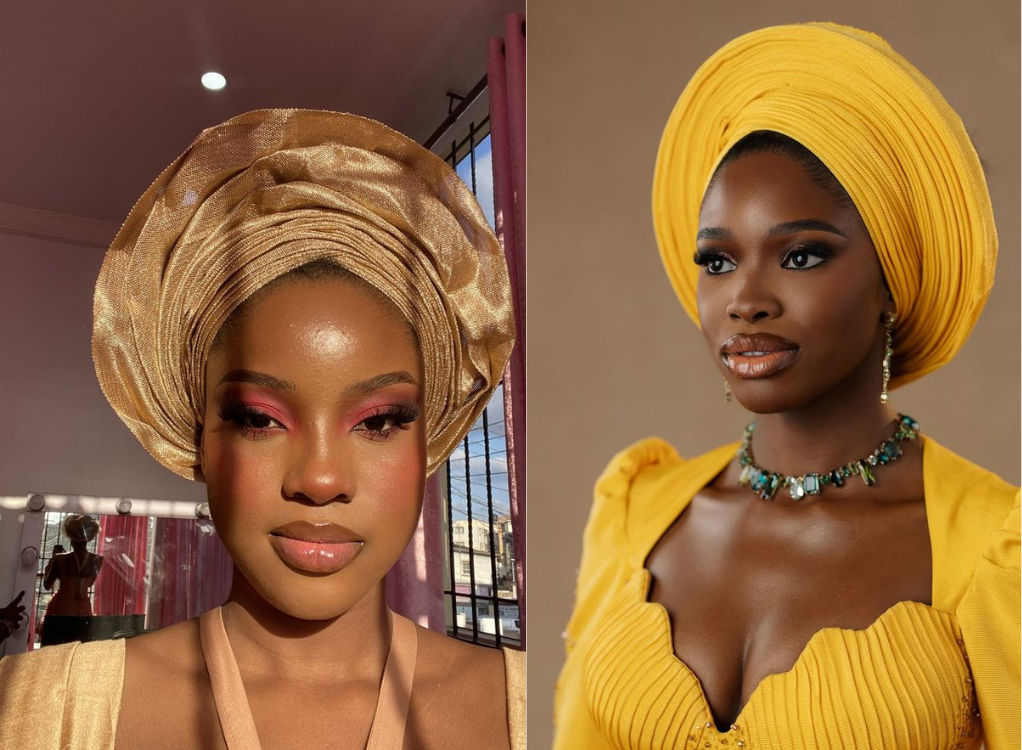
2. Colours are finally being allowed to clash
The traditional approach to styling a gele has almost always involved matching it closely to the outfit, with the same aso ebi fabric, or at the very least a colour from the same palette, making its way onto the head without much question.
That old certainty is fading fast, because colour itself has become one of the more exciting tools in how a gele is styled.
A bright, saturated gele against a muted outfit creates instant contrast, while a quieter, more restrained shade can pull an otherwise vivid look back under control, and even when the headwrap shares no obvious colour with the clothes at all, that deliberate mismatch is often exactly what makes the outfit feel intentional rather than accidental.
The colour no longer has to belong to the outfit, because sometimes its real job is to interrupt it, and that interruption is precisely the point.
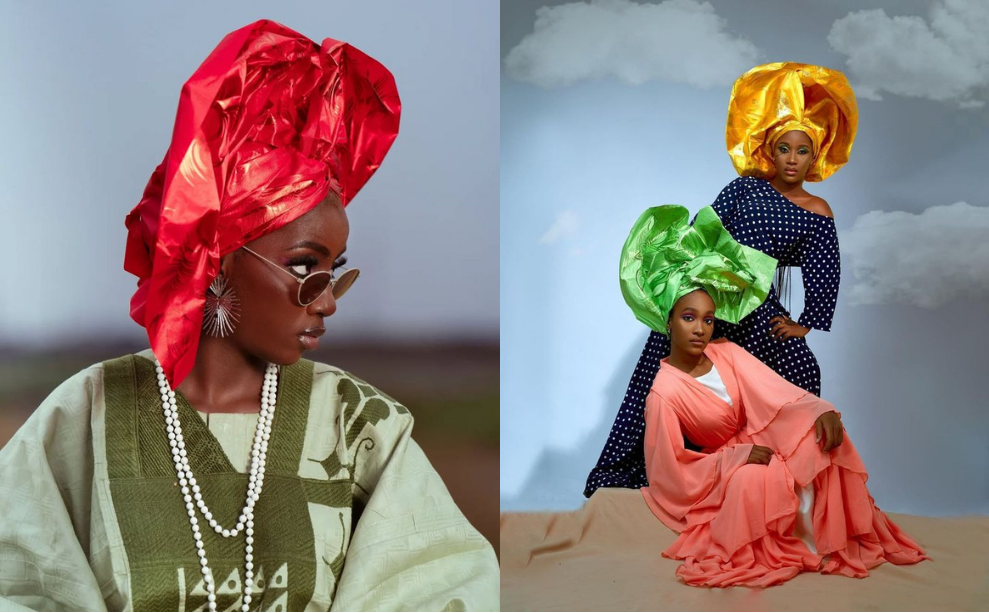
3. Asymmetry is replacing perfection
The traditional gele has long been defined by precision, its folds carefully arranged and its shape balanced with almost mathematical evenness around the head.
That rigid balance is loosening as asymmetrical styles take hold, with a peak now allowed to lean deliberately to one side, one section rising higher than the other, or the folds spreading unevenly across the head in a way that would once have been considered a mistake.
Those small departures from symmetry give the gele an entirely different personality, because even when the construction underneath remains meticulous, the finished shape feels looser and less formal simply by refusing to follow a fixed, predictable formula.
A little imbalance, it turns out, is often what makes the whole look feel unmistakably individual.
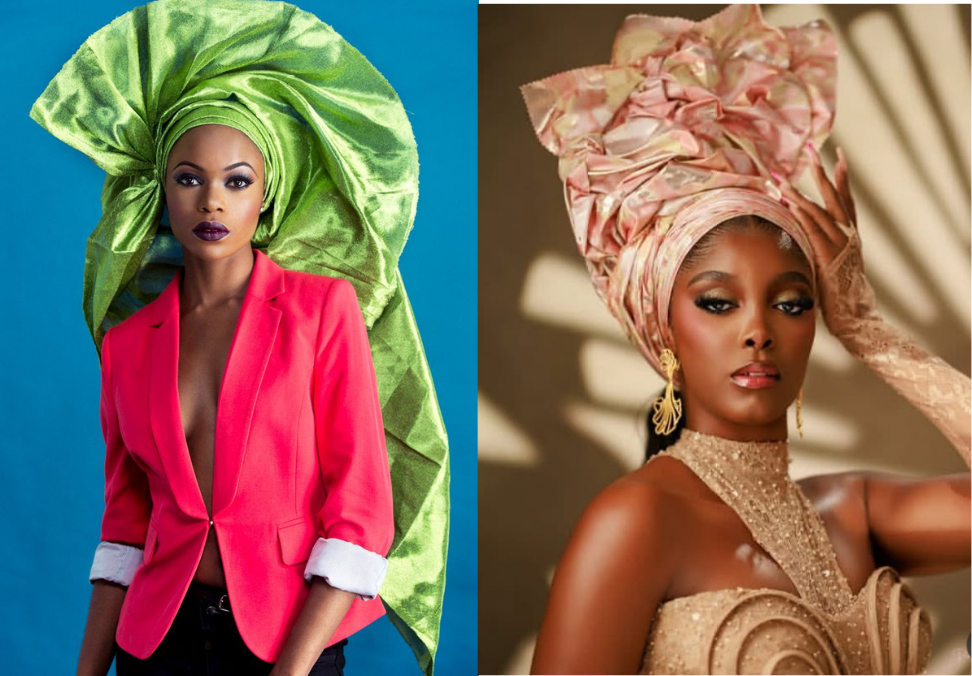
4. Sometimes, the gele is the only statement the outfit needs
Some women are pairing the gele with clothing that has no connection to owambe culture whatsoever. A plain evening gown built for a gala, a tailored suit meant for a boardroom or a red carpet, even a minimalist dress with no beading or embellishment.
In these outfits, the gele is doing all the work. There is no sequinned fabric, no matching aso ebi, no jewellery competing for attention, just one structured headwrap against a plain garment. Strip away everything else and the gele becomes the only thing left to look at, and it holds up on its own.
The gele has always known how to make an entrance. What has changed is just how many different entrances Nigerian women are now choosing to make with it.
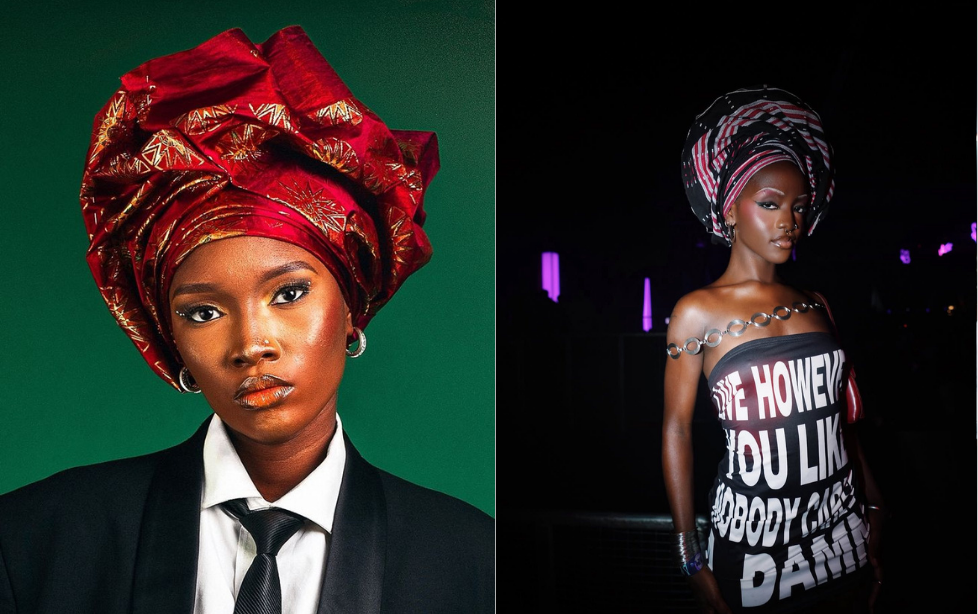
It can still be towering, elaborate and perfectly matched to an aso ebi when the occasion demands it, but it can just as easily be compact, unexpectedly coloured, paired with a sharply tailored suit or tilted deliberately off centre, and it is equally capable of completing an elaborate look or single handedly carrying a simple one.
For a headwrap that once seemed to come with a dress code all its own, the gele has never had this much freedom, and Nigerian women are clearly not done exploring everything they can do with it.
